Why do my easy rides have to feel so easy?
Because the goal isn’t to get the most out of today’s ride. It’s to get the most out of your whole season, and easy riding trains you at a price you can keep paying.
The video version, 5:01, narrated by a synthetic voice. Watch on YouTube · Watch the Short
Bryn’s athletes, and the ride you know
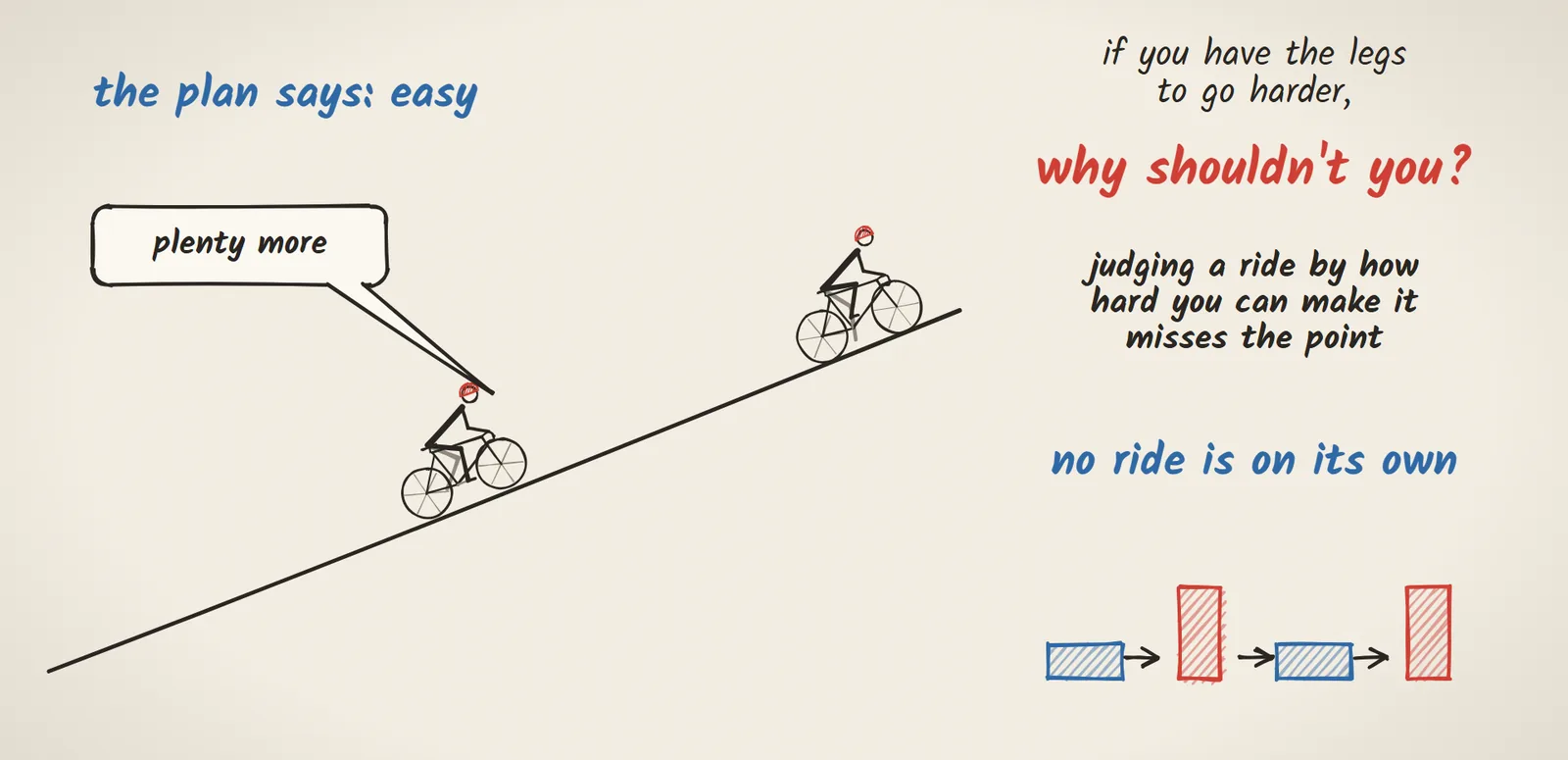
The question comes from Bryn Griffith, founder of Evolve Coaching, who sees athletes ride zone 2 too hard and doubt that truly easy riding does much. You know the ride. The plan says easy, your legs say there’s plenty more, and someone comes past on a climb. If you have the legs to go harder, why shouldn’t you? Because judging a ride by how hard you can make it misses the point. No ride is on its own.
Can easy riding do real work?
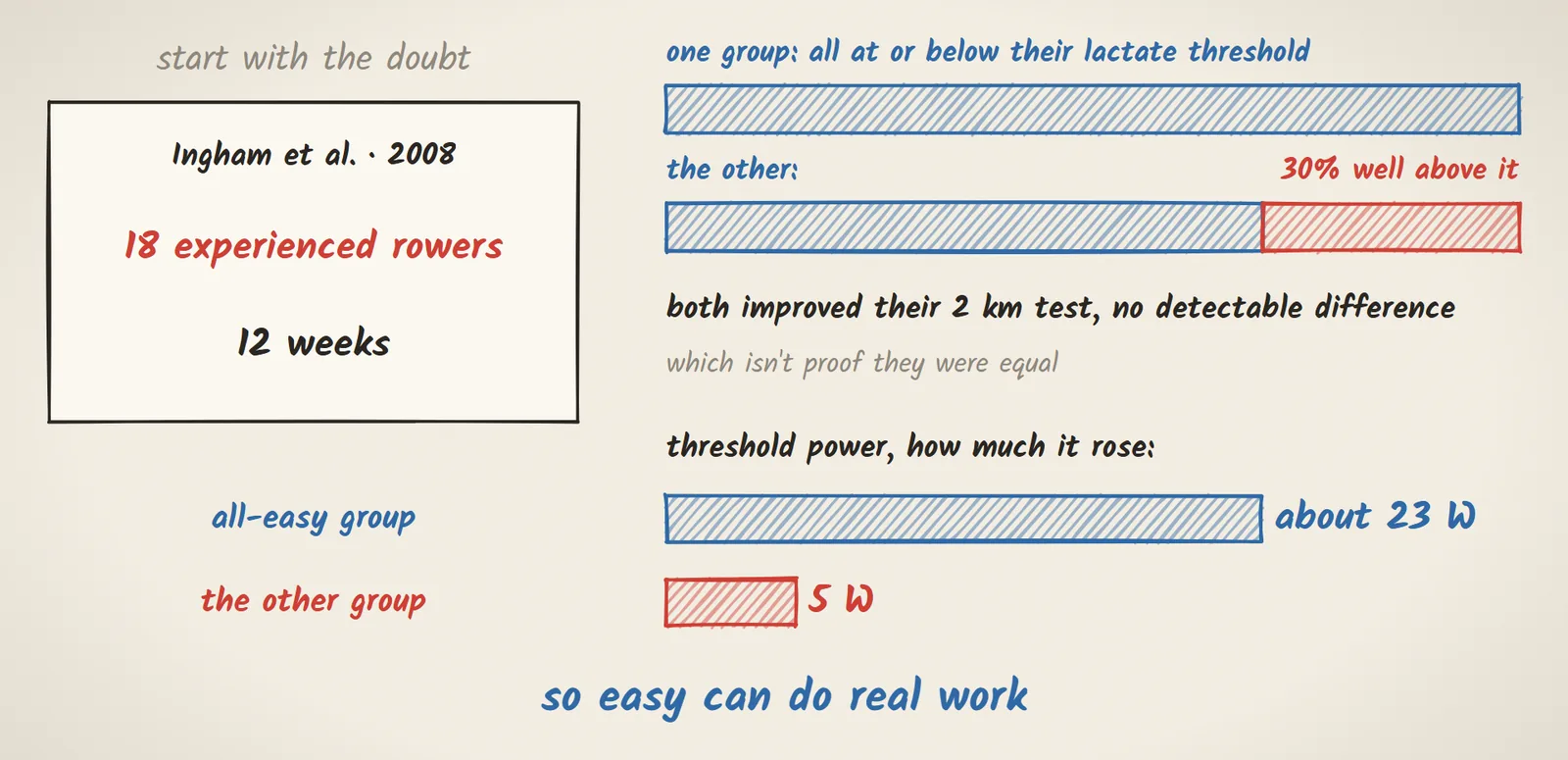
Start with the doubt. Eighteen experienced rowers trained for 12 weeks, one group entirely at or below their lactate threshold, the other with 30% well above it. Both improved their 2-kilometer test, with no detectable difference between them, which isn’t proof they were equal. And the all-easy group raised its threshold power more: about 23 W against 5. So easy can do real work.
What differs is the bill
But across hundreds of training studies, harder training generally built more mitochondria per hour. Total time mattered too, so intensity and hours both count. What differs is the bill.
Your first threshold
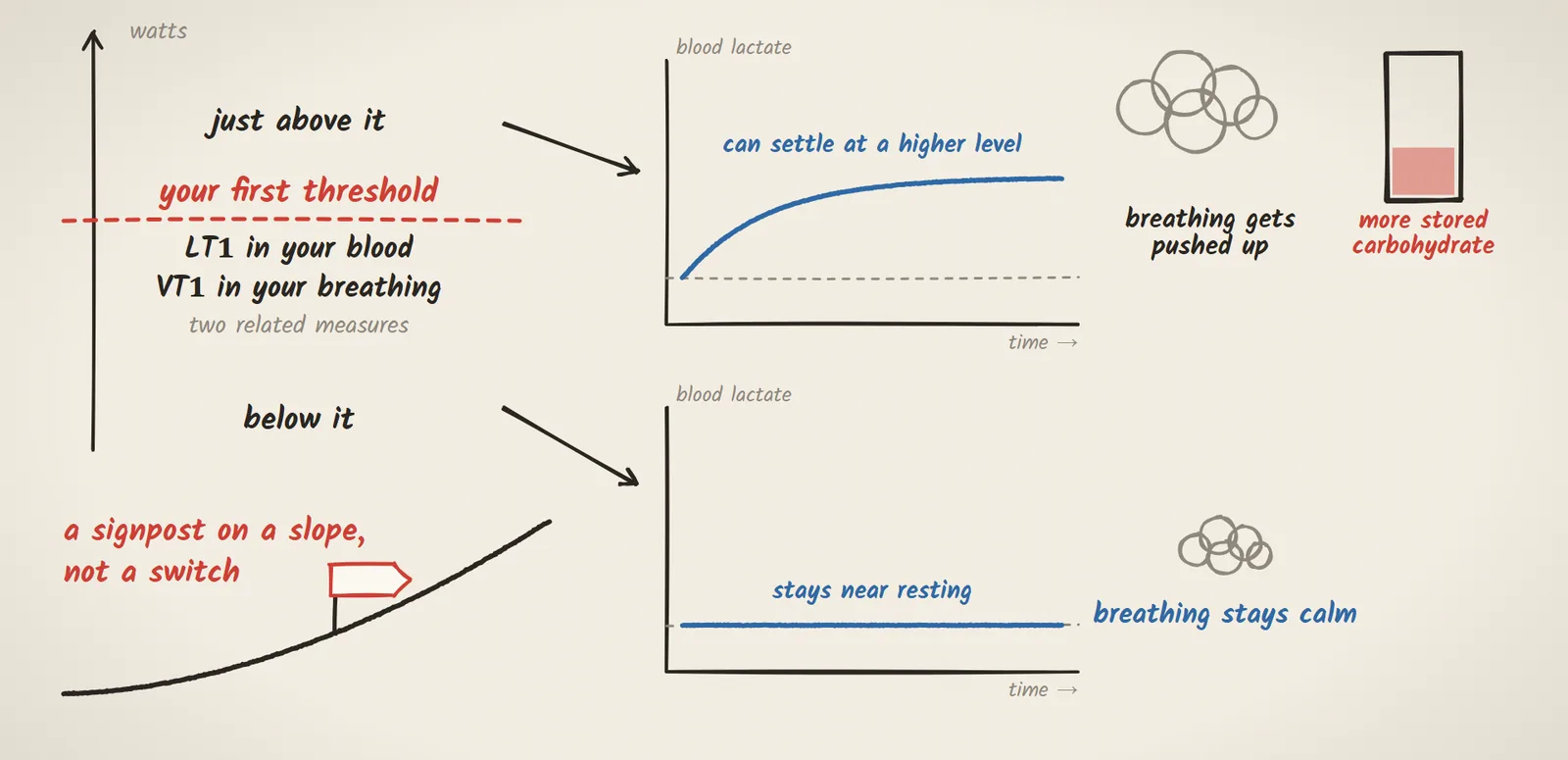
That bill changes around your first threshold, LT1 in your blood or VT1 in your breathing, two related measures. Below it, lactate stays near resting and breathing stays calm. Just above it, lactate can settle at a higher level, breathing gets pushed up and you burn more stored carbohydrate. It’s a signpost on a slope, not a switch.
One marker, in runners
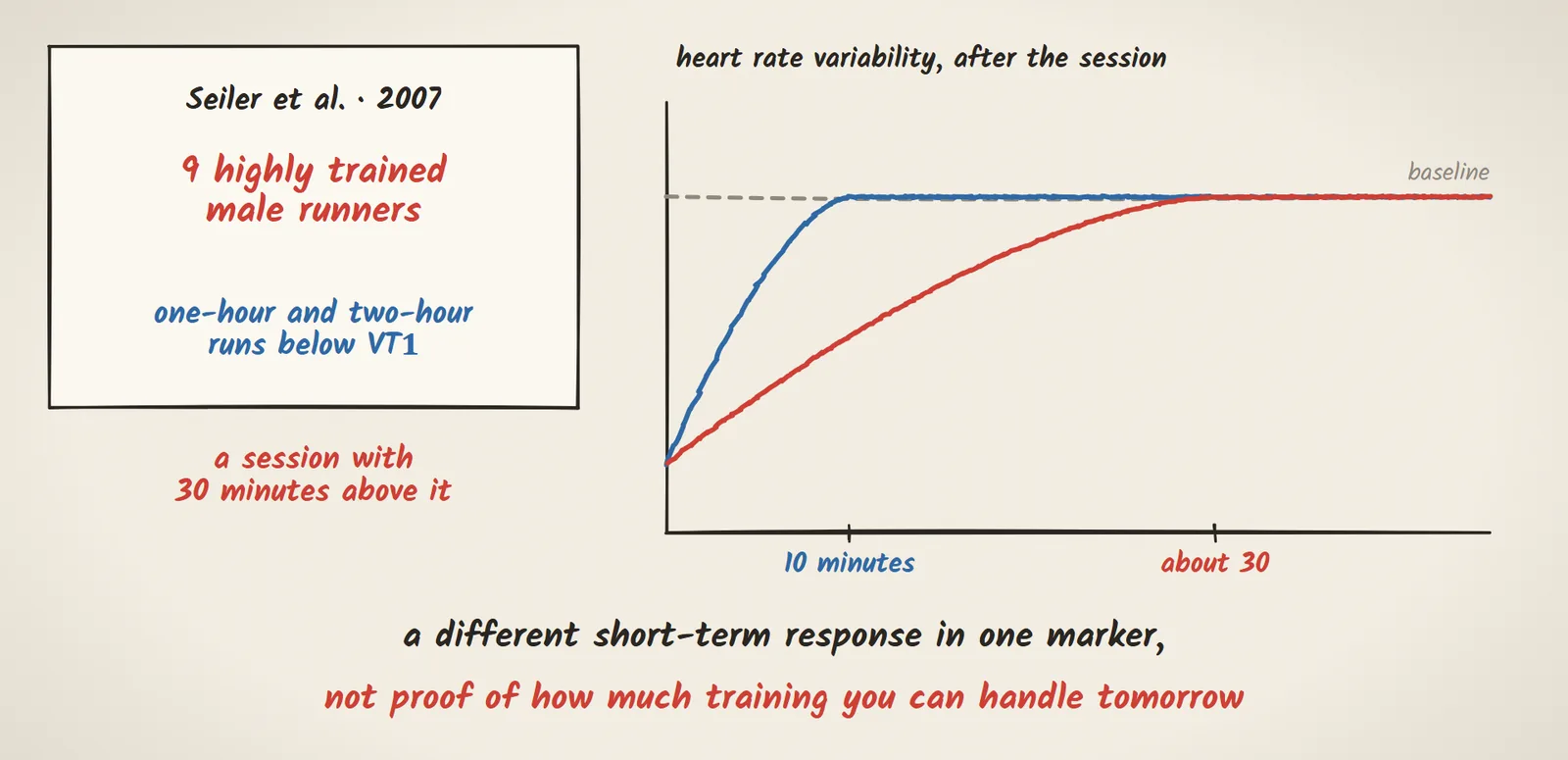
In one study, 9 highly trained male runners did one-hour and two-hour runs below VT1, and their heart rate variability was back to baseline within 10 minutes. After a session with 30 minutes above it, that took about 30. That’s a different short-term response in one marker, not proof of how much training you can handle tomorrow.
Add the rides up
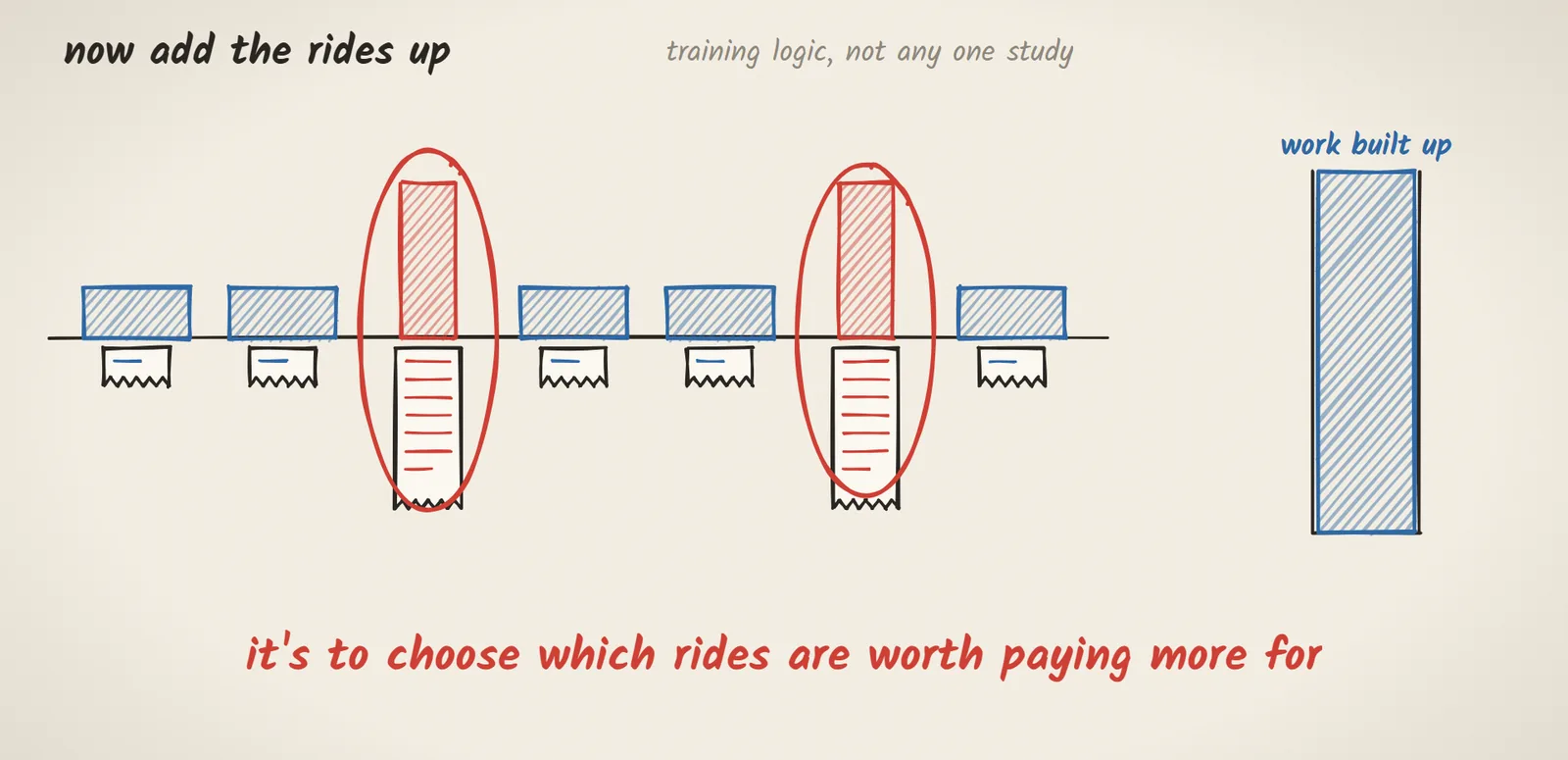
Now add the rides up. This is where training logic takes over from any one study. Easy riding may give you less stimulus per minute, but it lets you build up more work and still have legs for the sessions meant to hurt. So the job isn’t to make every ride cheap. It’s to choose which rides are worth paying more for.
How many hours do you have?
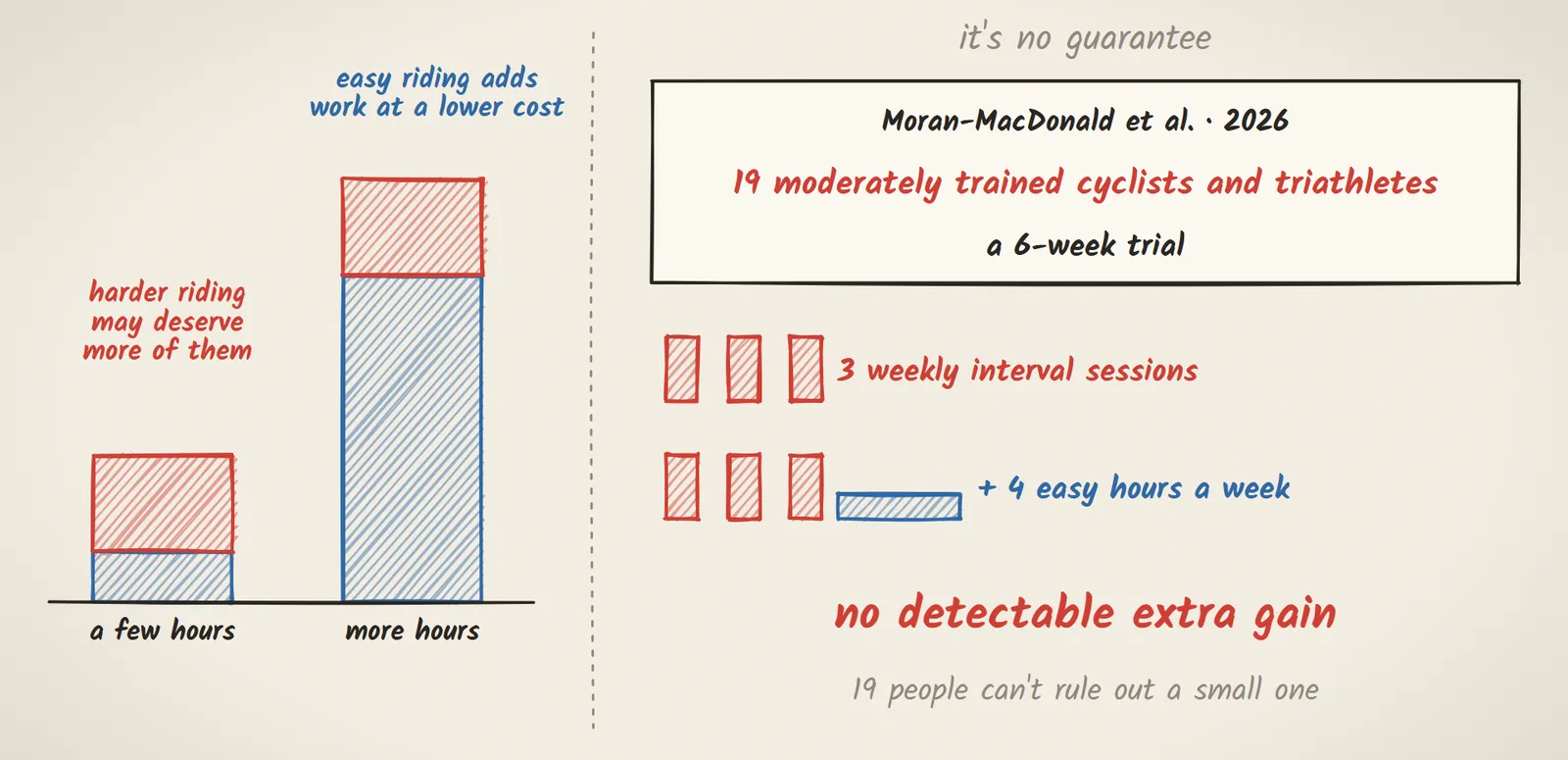
If you only have a few hours a week, harder riding may deserve more of them. With more, easy riding is how you add work at a lower cost. It’s no guarantee: in a 6-week trial of 19 moderately trained cyclists and triathletes, adding 4 easy hours a week to 3 weekly interval sessions brought no detectable extra gain, though 19 people can’t rule out a small one.
The trap: accidental tempo
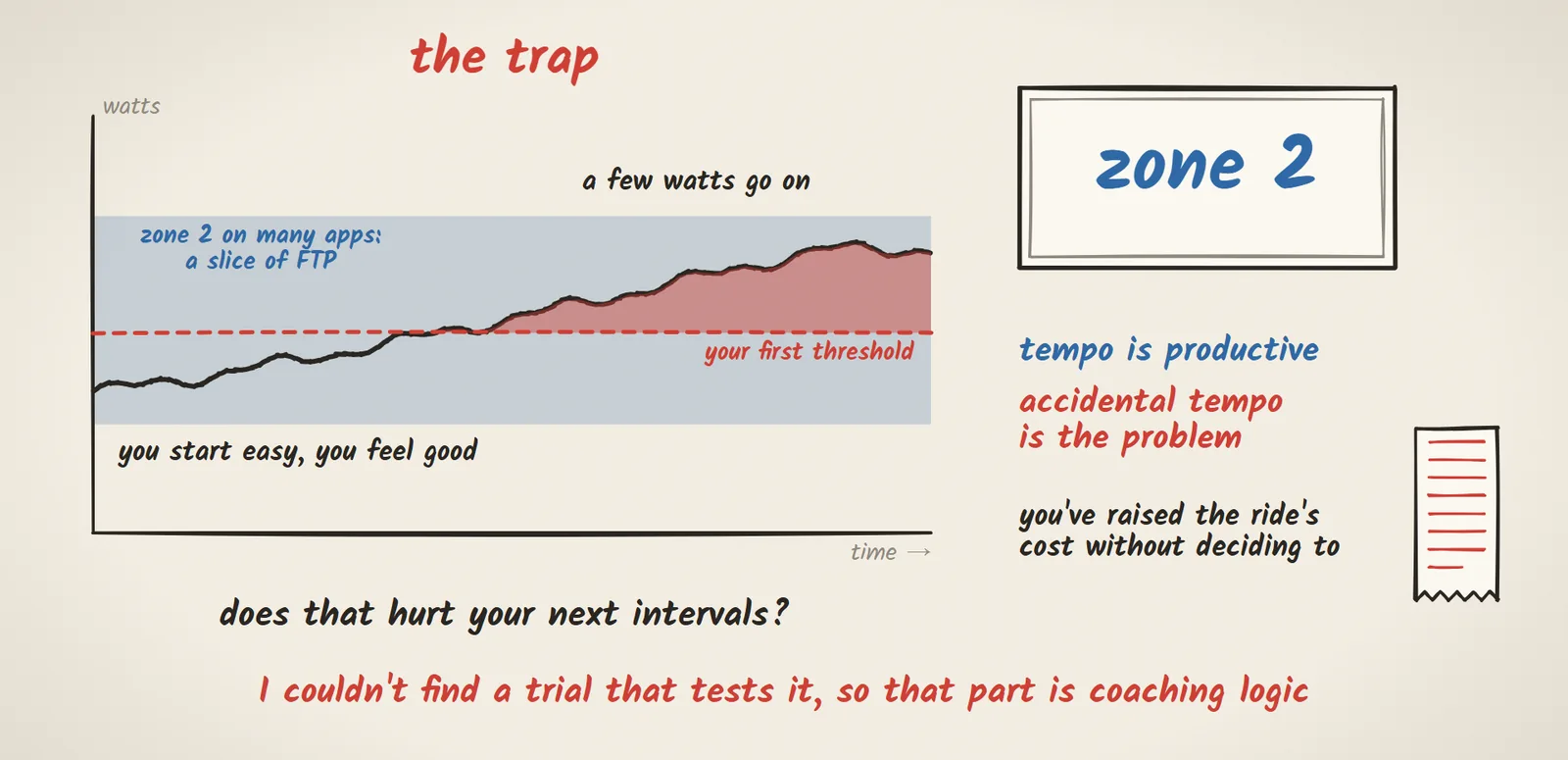
Which brings us to the trap. You start easy, you feel good, a few watts go on, and the screen still says zone 2, because on many apps that’s a slice of FTP, not a measurement of your first threshold. Tempo is productive. Accidental tempo is the problem: you’ve raised the ride’s cost without deciding to. Whether that hurts your next intervals, I couldn’t find a trial that tests it, so that part is coaching logic.
What it means for you
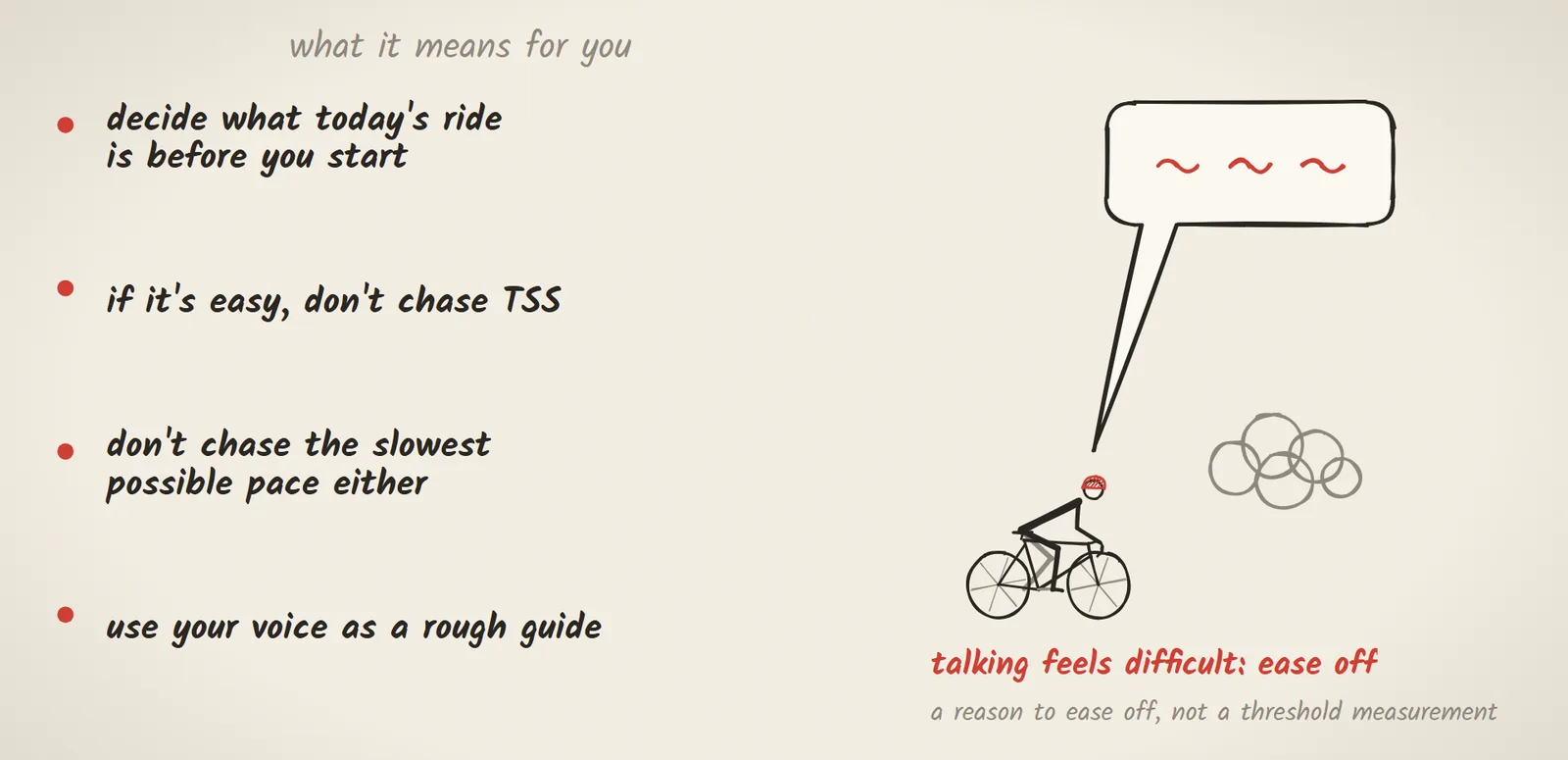
So what does this mean for you? Decide what today’s ride is before you start. If it’s easy, don’t chase TSS. That measures training load, not the adaptation you get from it. But don’t chase the slowest possible pace either: the research doesn’t show slower is always better. Use your voice as a rough guide. If a full sentence comes out comfortably, with your breathing calm, you’re probably keeping it manageable. When talking starts to feel difficult, that’s a reason to ease off, not a threshold measurement.
A heart rate cap that’s yours
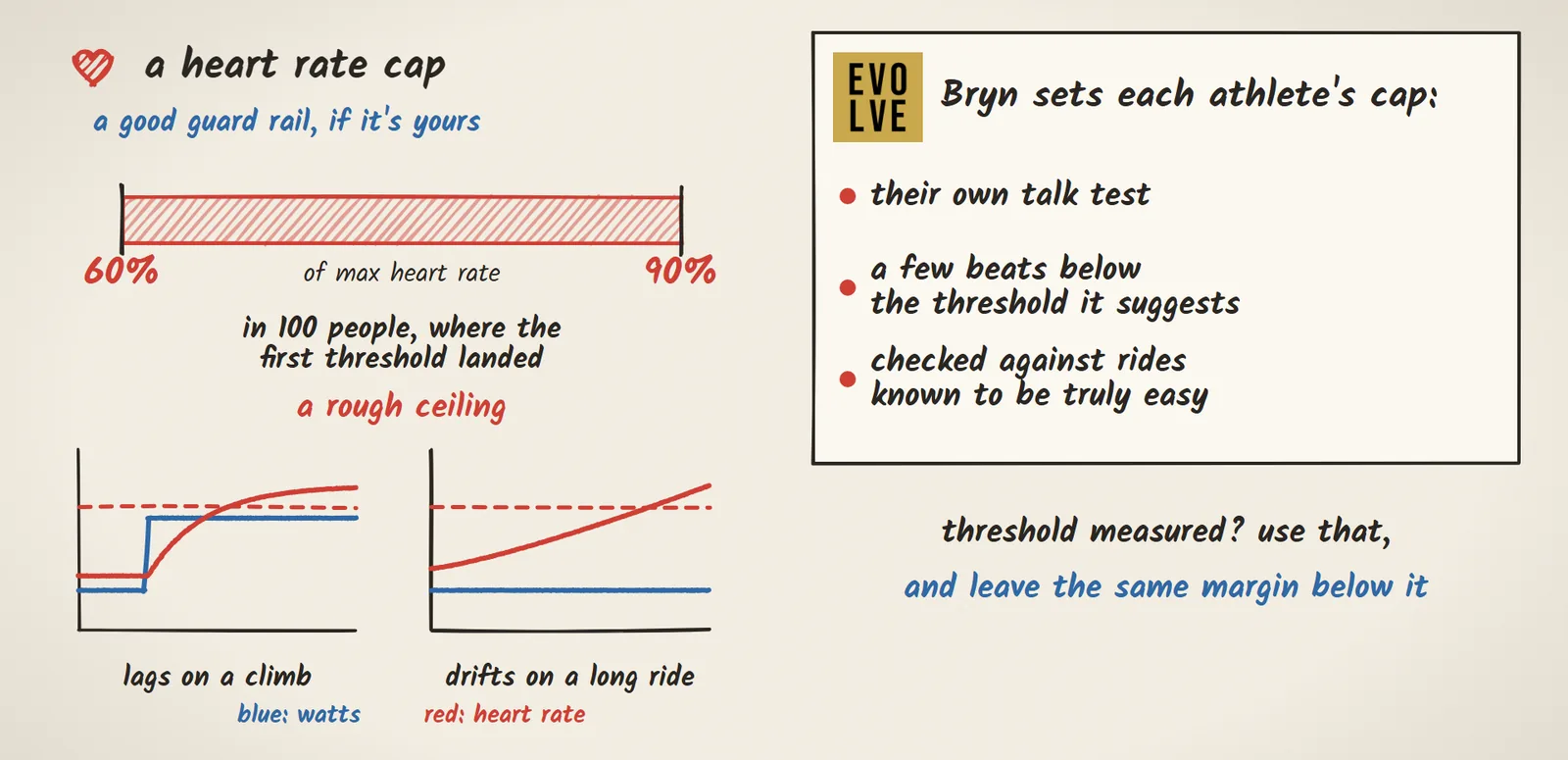
Bryn’s athletes often need a heart rate cap. It’s a good guard rail if it’s yours: in 100 people, the first threshold landed anywhere from 60 to 90% of max heart rate. Bryn sets each athlete’s cap from their own talk test, a few beats below the threshold it suggests, then checks it against rides known to be truly easy. If you’ve had your threshold measured, use that, and leave the same margin below it. Treat it as a rough ceiling, since heart rate lags on a climb and drifts on a long ride.
Let them go
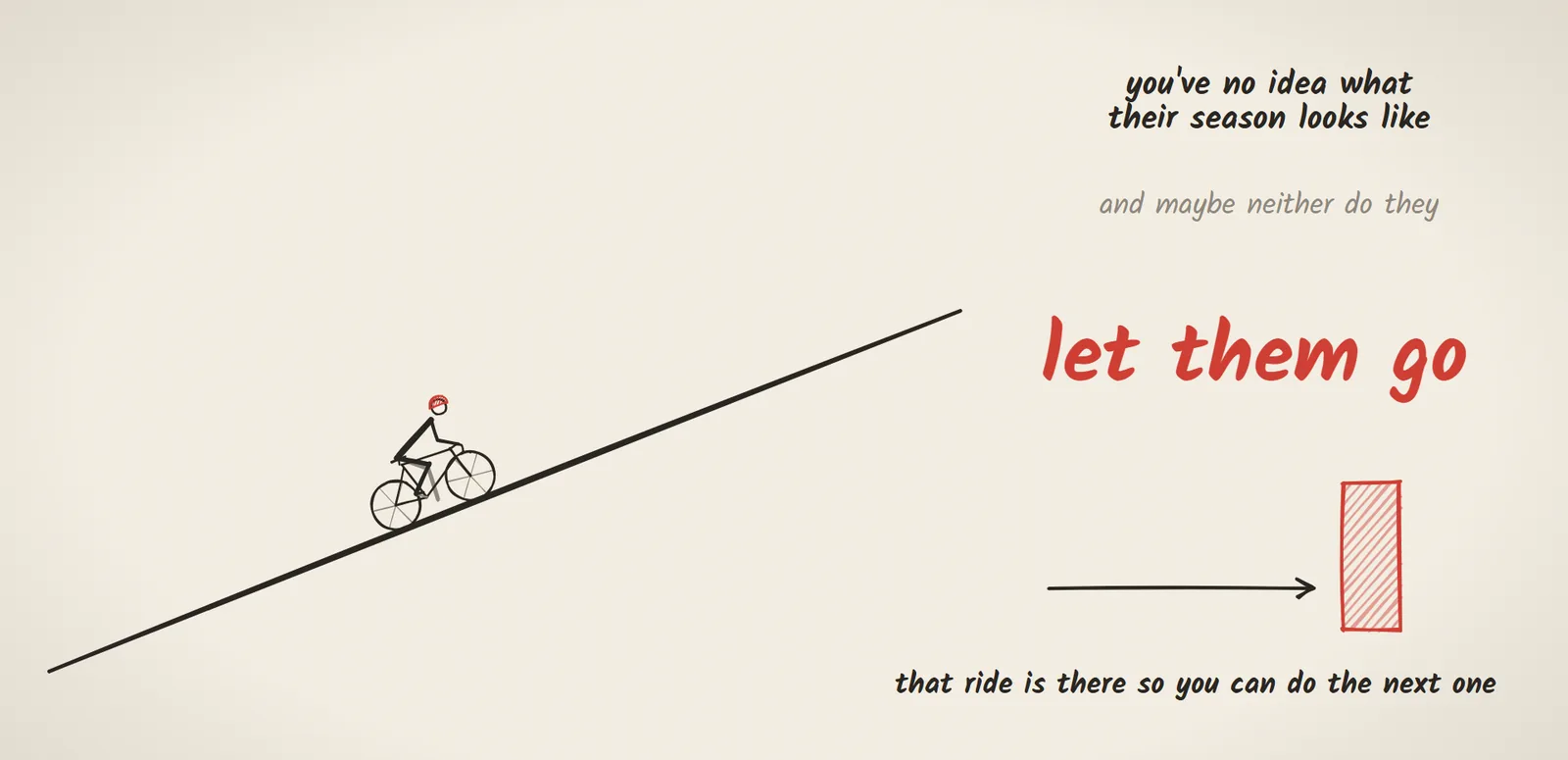
When the plan says hard, ride hard, on purpose. Training isn’t about winning today’s workout. It’s about building the most fitness you can over the whole season, and easy riding is one of the ways you make that possible. As for the rider who came past, you’ve no idea what their season looks like, and maybe neither do they. When someone comes past on an easy day, let them go. That ride is there so you can do the next one.
That’s what’s underneath the watts.
Sources
Also in this article
- Across hundreds of training studies, more mitochondria per hour from harder training, with training load the best predictor: Mølmen KS, Almquist NW, Skattebo Ø. Effects of exercise training on mitochondrial and capillary growth in human skeletal muscle: a systematic review and meta-regression. Sports Med. 2025;55(1):115-144. doi.org/10.1007/s40279-024-02120-2
- In 100 people, the first threshold landed anywhere from 60 to 90% of max heart rate: Iannetta D, Inglis EC, Mattu AT, et al. A critical evaluation of current methods for exercise prescription in women and men. Med Sci Sports Exerc. 2020;52(2):466-473. doi.org/10.1249/mss.0000000000002147
Written and researched by Yarin Podoler, a cyclist who wanted to know what’s underneath the watts.