Why do my legs burn on hard efforts, and is it lactic acid?
Not on its own. The burn is a set of sensors in your muscle reading a mix of chemicals that rises as the work gets harder. It’s a gauge, not damage.
The video version, 3:51, narrated by a synthetic voice. Watch on YouTube · Watch the Short
The burn, and the old story
Picture a hard effort: a climb you went into a little too fast, or the last minute of a 4-minute interval. Somewhere in the second minute the front of your thighs starts to burn, and it builds with every pedal stroke. Then you ease off, and within a minute or so it fades. Most of us were handed an explanation for that early on: lactic acid, a waste product that floods the muscle, poisons it, and leaves you sore the next day. It’s one of the most repeated ideas in sport, and almost every part of it needs revising.

Lactate isn’t waste
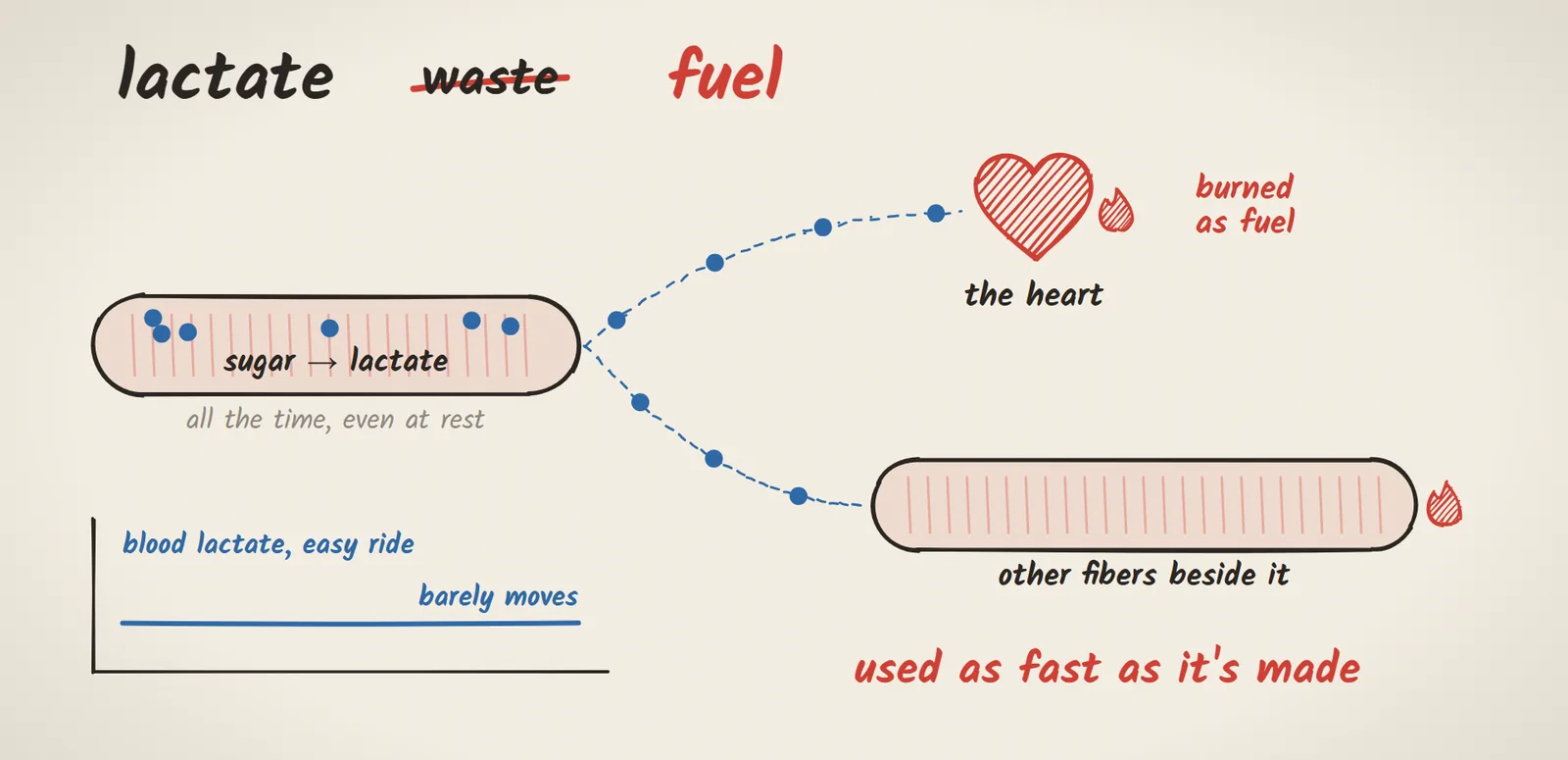
Start with lactate itself, because it isn’t waste. Your muscles make it all the time, even at rest, as a normal step in burning sugar. Much of it leaves the fiber where it was made and gets burned as fuel somewhere else: in the heart, and in other muscle fibers working beside it. On an easy ride, plenty of lactate is moving through you, and the level in your blood barely moves, because it’s being used as fast as it’s made.
What changes on a hard effort
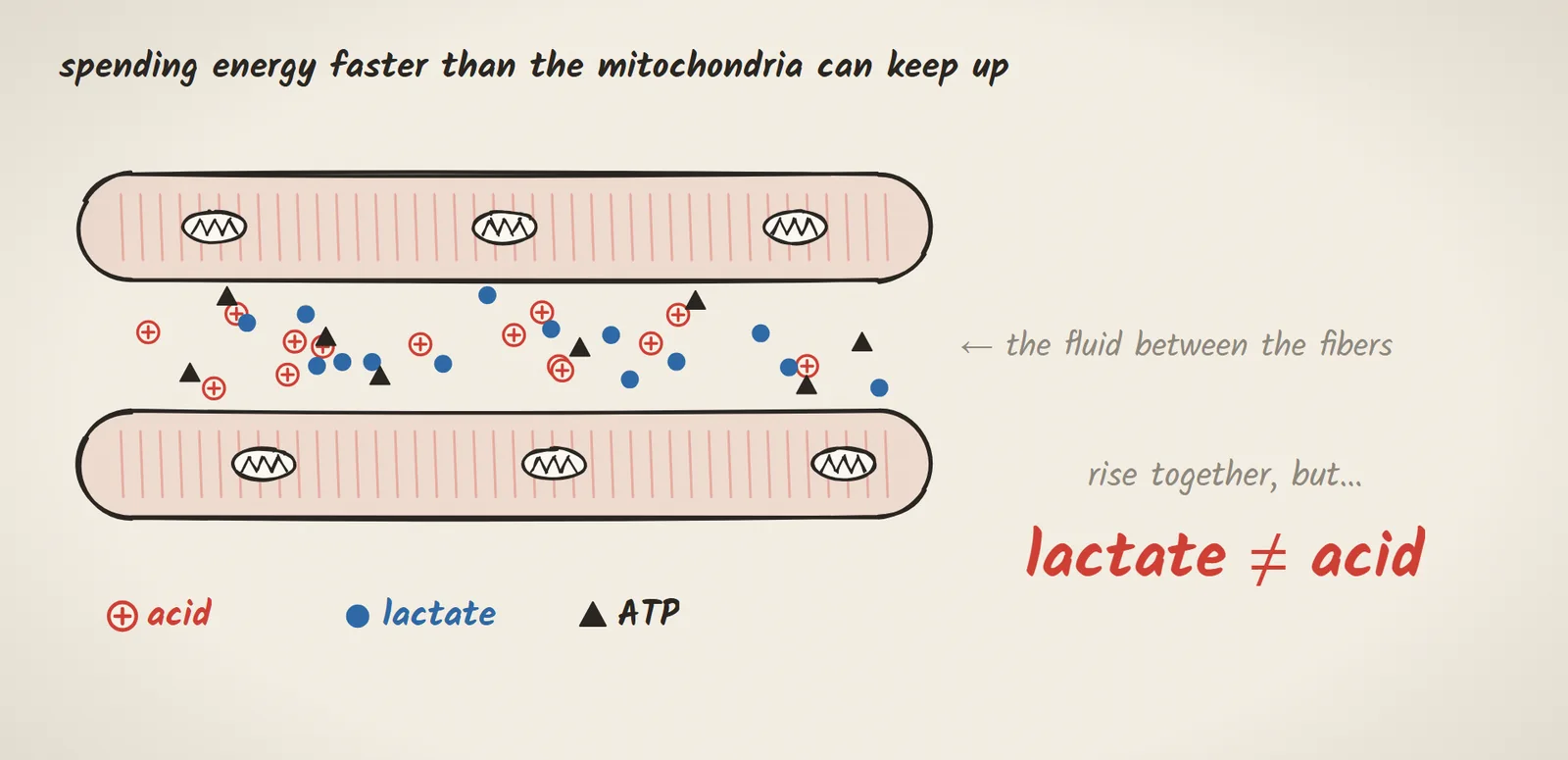
What changes on a hard effort is the pace. Your fibers are spending energy faster than their mitochondria can keep up, and the chemistry around them shifts. The fluid between the fibers becomes more acidic, lactate climbs, and some of the muscle’s energy currency, ATP, is released into that fluid too. Lactate and acid do rise together, which is how the name stuck, but they are two different things.
The sensors that read it
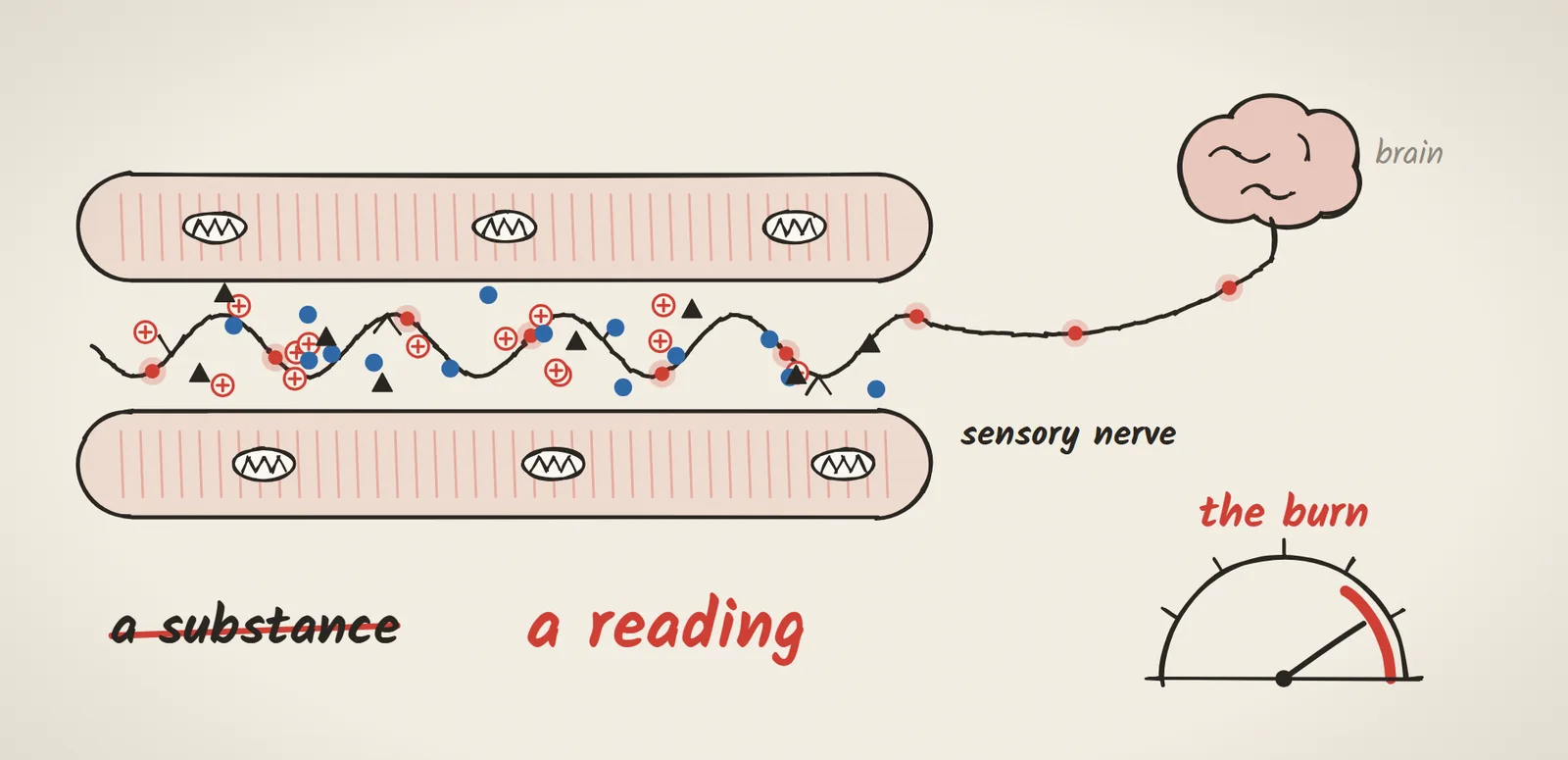
Woven through the muscle are small sensory nerves, and this mixture is what they respond to. As it rises, they fire, and your brain reads that signal as the burn. So the burn isn’t a substance. It’s a reading.
The experiment
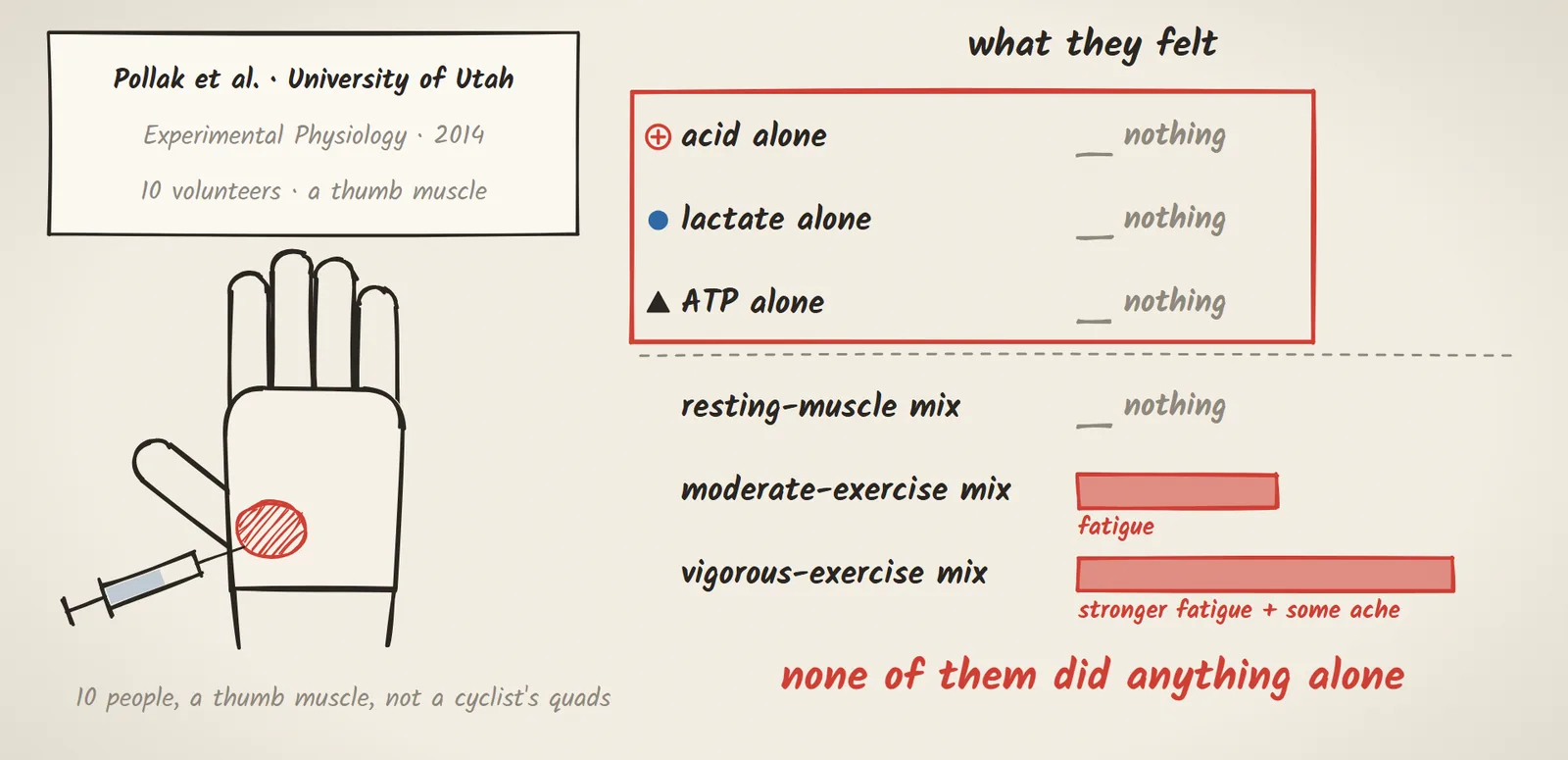
How do we know it takes the mix? In 2014, a group in Utah infused tiny amounts of these chemicals into a small muscle at the base of the thumb, in 10 volunteers, and asked them what they felt. Acid on its own, lactate on its own, ATP on its own, each at the highest amount they tested: nothing. The mix found in resting muscle: nothing. Then the mix you’d find during moderate endurance exercise, and people reported a clear sense of fatigue. The mix from vigorous exercise brought stronger fatigue and some ache. Ten people and a thumb muscle, not a cyclist’s quads, but the result is hard to argue with: none of those molecules did anything alone.
What it means for you
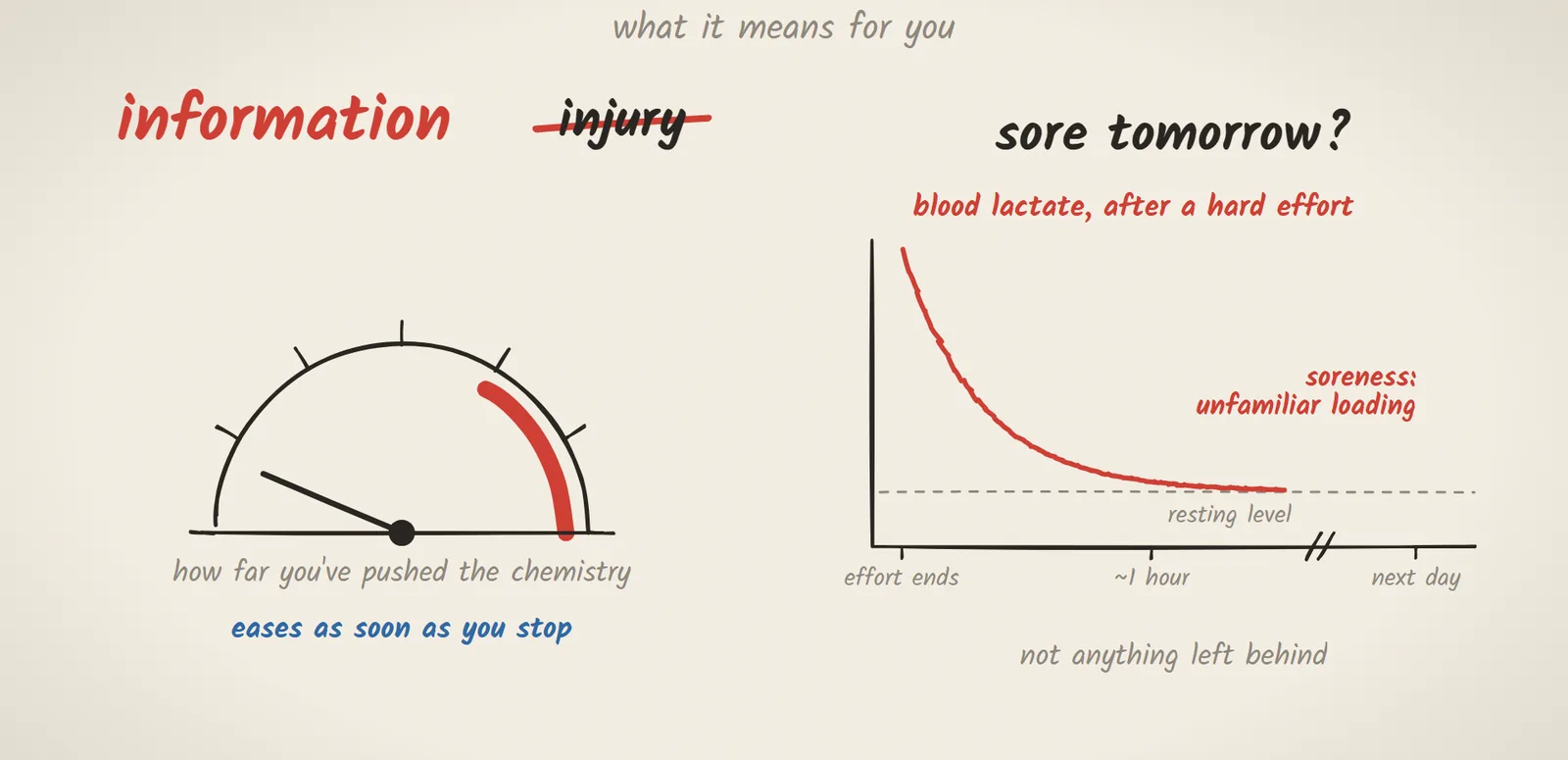
So what does this mean for you? First, the burn is information, not injury. It tells you how far you’ve pushed the chemistry in your legs, and it eases as soon as you stop pushing. It isn’t why you’re sore tomorrow, either. Blood lactate is usually back near its resting level within an hour or so, and next-day soreness comes from unfamiliar loading, not from anything left behind.
Your brain paces you with it
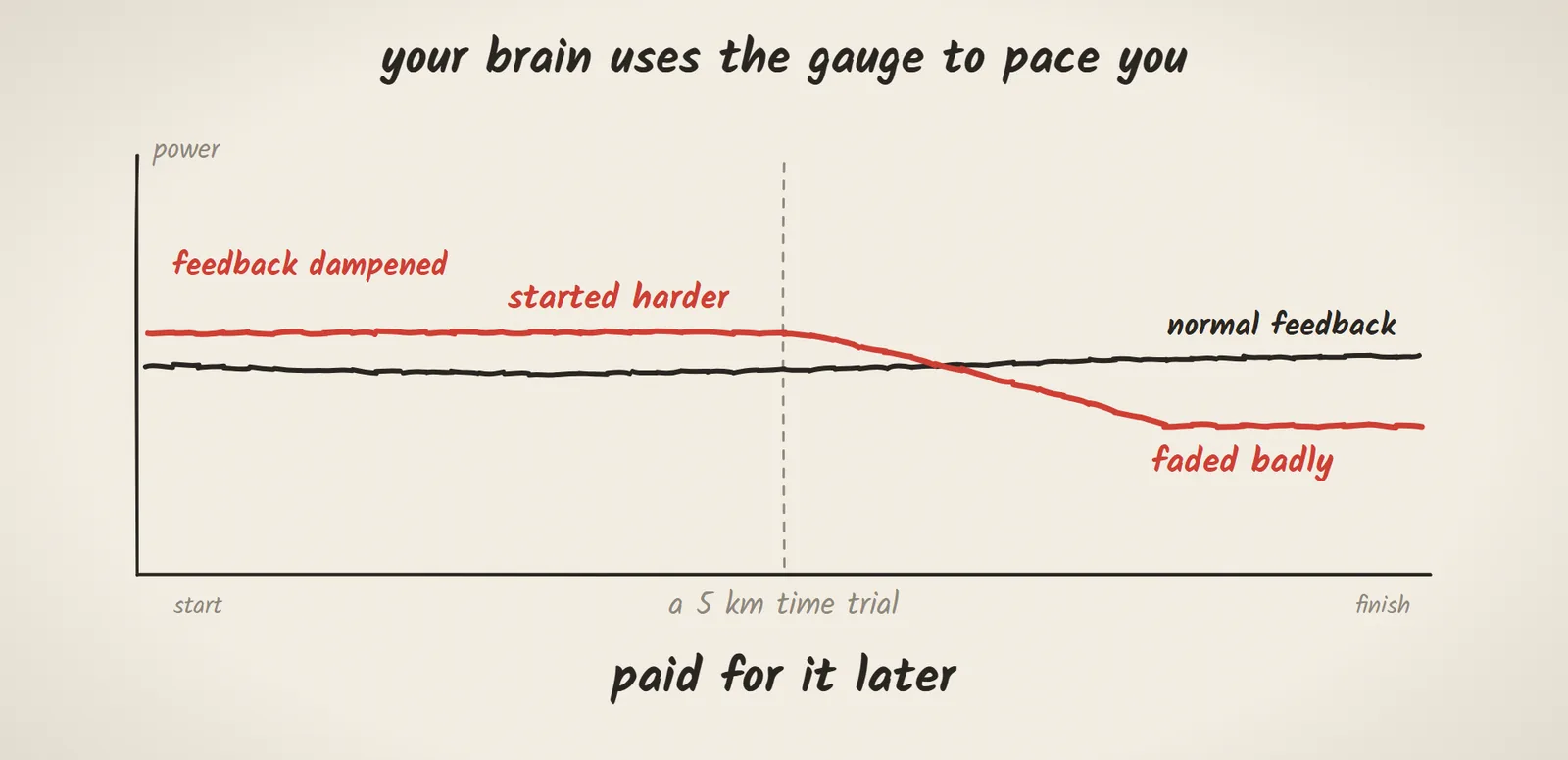
Second, your brain is already using that gauge to pace you. In one experiment, cyclists given a spinal injection that dampened this feedback started a 5 km time trial harder, then faded badly in the second half. Without the gauge, they paid for it later.
Fitness moves the gauge
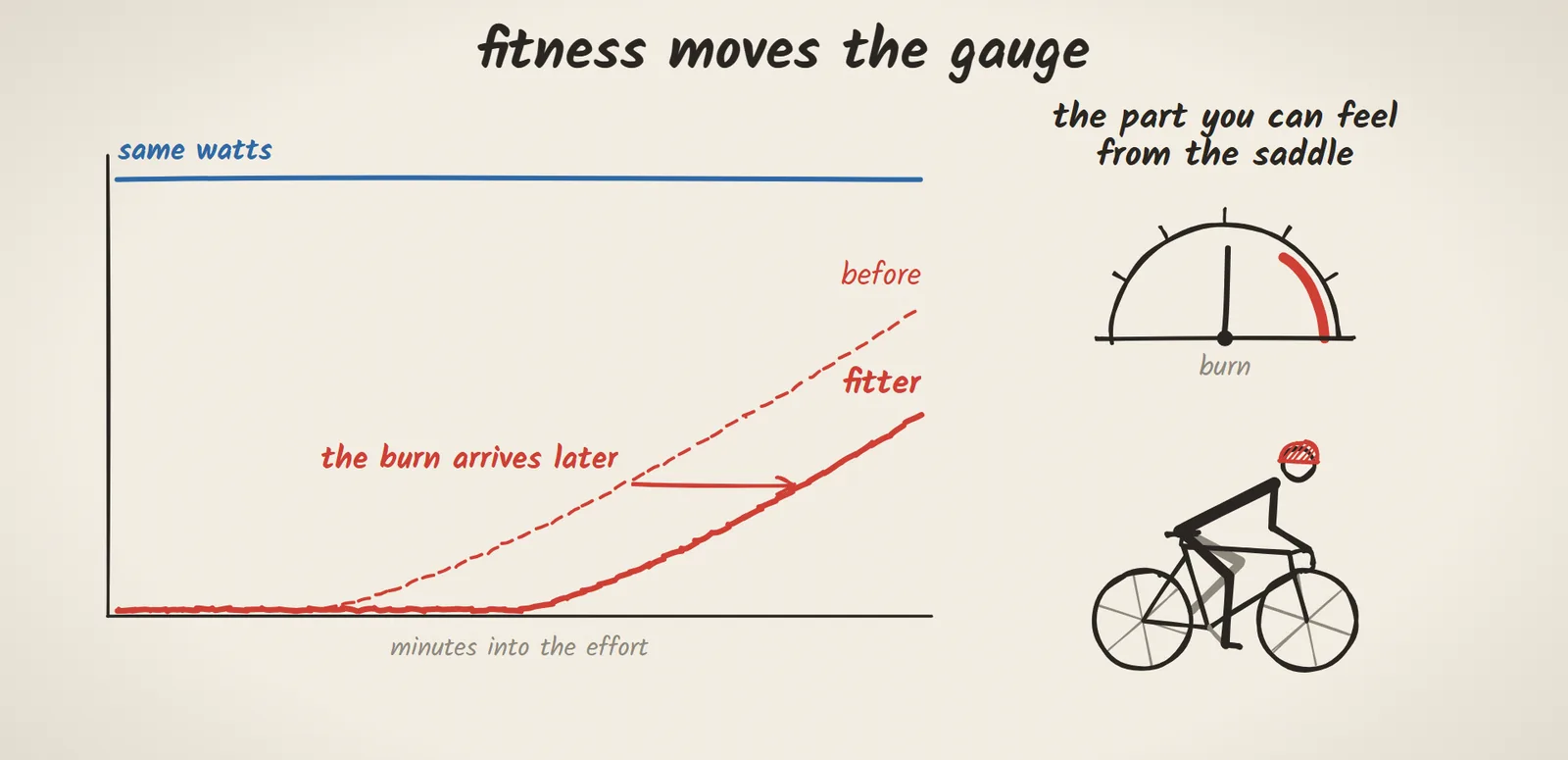
And third, fitness moves the gauge. As your aerobic engine improves, the same watts push that chemistry less far, so the burn arrives later. Honestly, I’ve come to like it. It’s the one part of all this chemistry you can actually feel from the saddle.
That’s what’s underneath the watts.
Sources
The study
- Pollak KA, Swenson JD, Vanhaitsma TA, Hughen RW, Jo D, Light KC, Schweinhardt P, Amann M, Light AR. Exogenously applied muscle metabolites synergistically evoke sensations of muscle fatigue and pain in human subjects. Exp Physiol. 2014;99(2):368-380. doi.org/10.1113/expphysiol.2013.075812
Also in this article
- Amann M, et al. Opioid-mediated muscle afferents inhibit central motor drive and limit peripheral muscle fatigue development in humans. J Physiol. 2009;587:271-283. doi.org/10.1113/jphysiol.2008.163303
- Bergman BC, et al. Active muscle and whole body lactate kinetics after endurance training in men. J Appl Physiol. 1999;87(5):1684-1696. doi.org/10.1152/jappl.1999.87.5.1684
- Schwane JA, et al. Is lactic acid related to delayed-onset muscle soreness? Phys Sportsmed. 1983;11:124-131. doi.org/10.1080/00913847.1983.11708485
Written and researched by Yarin Podoler, a cyclist who wanted to know what’s underneath the watts.