Will lifting weights raise my FTP?
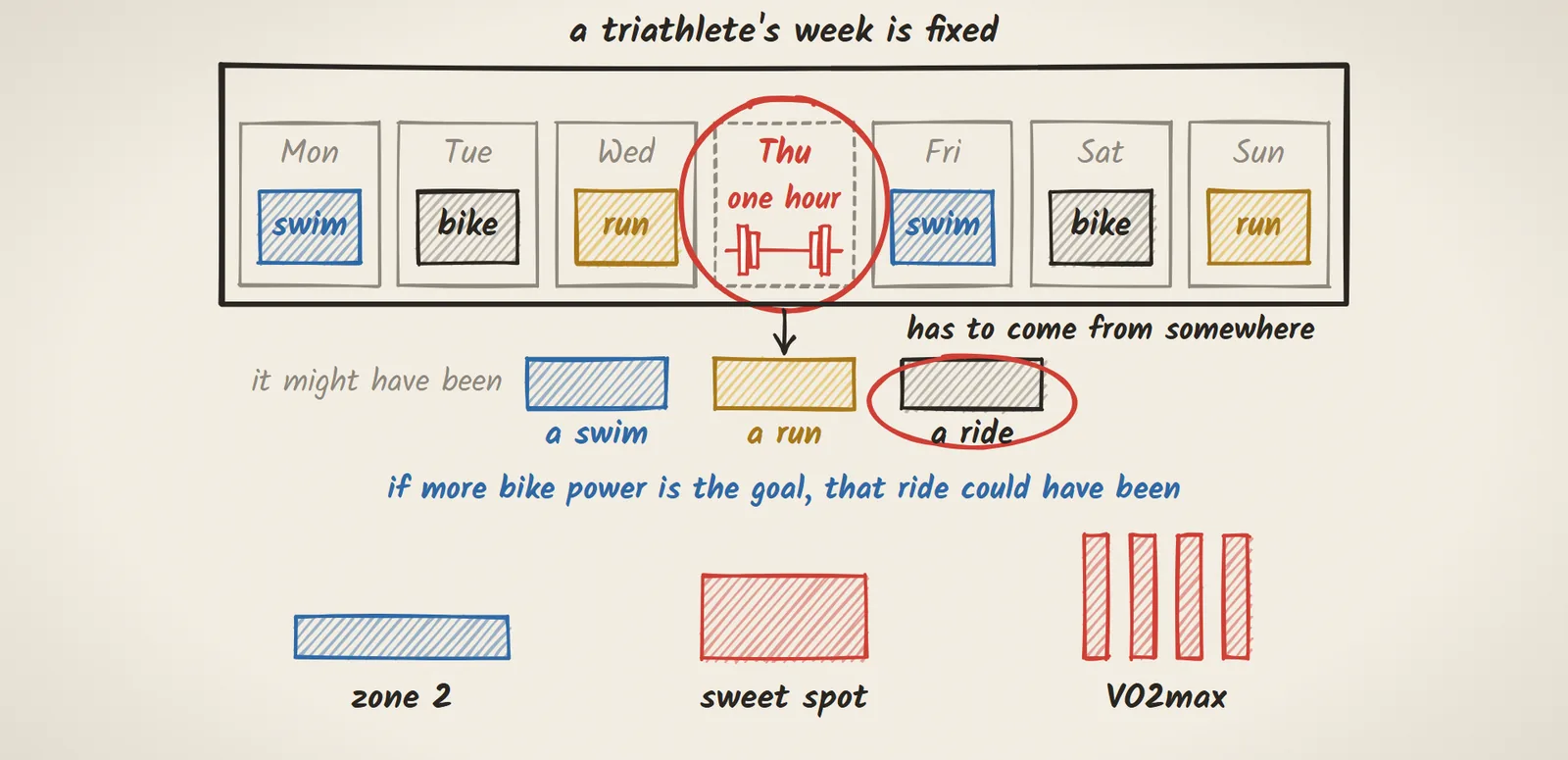
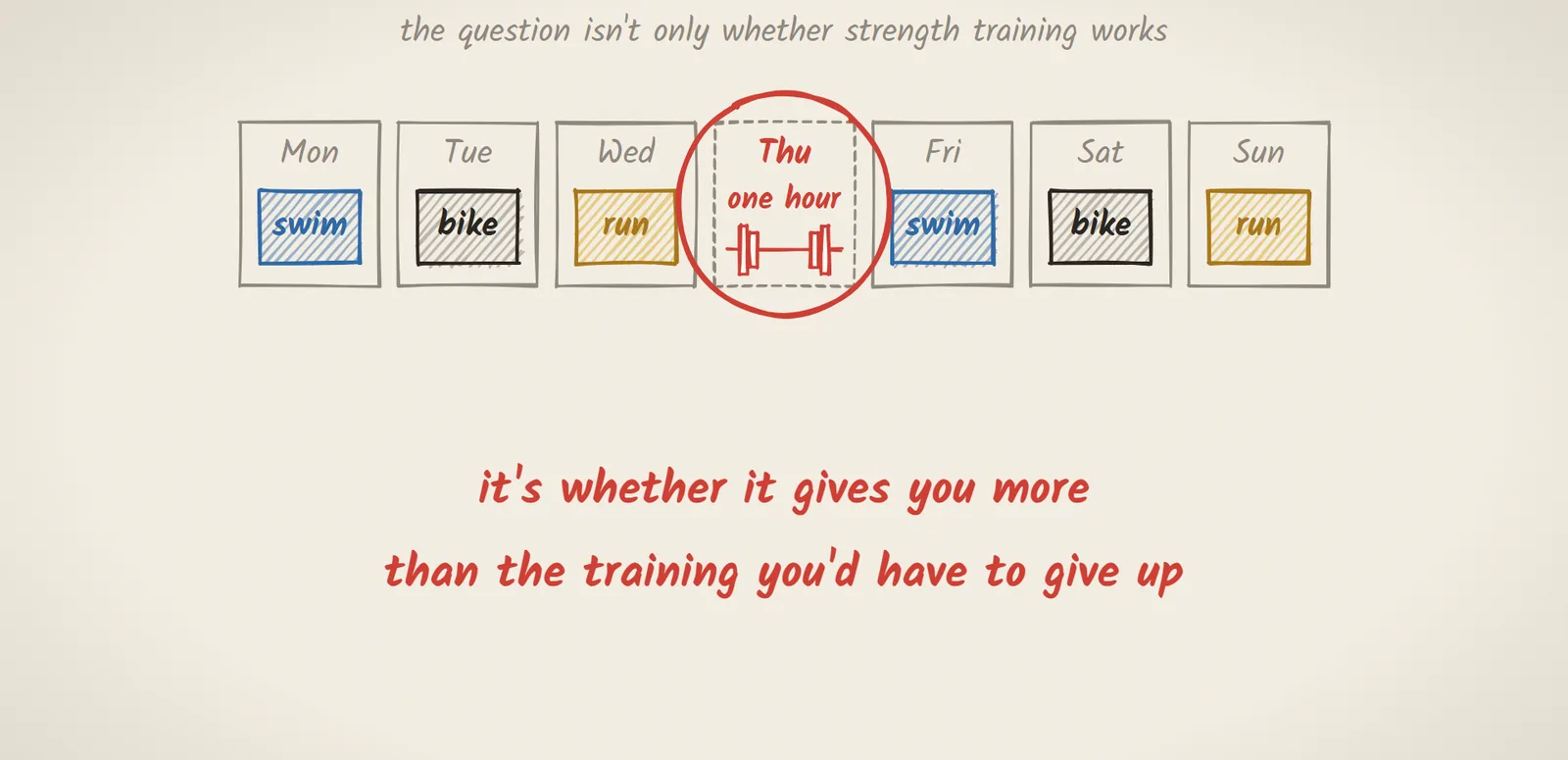
Phil Ellison, Founder and Head Coach at Adapted, works with cyclists and triathletes, many of whom fit three sports into a busy week. He often sees those chasing more power on the bike decide they need stronger legs and more gym time. So say you’re a triathlete with an hour to train on Thursday, and you’re thinking about the gym. Could lifting weights help you hold more watts on the bike, and raise your FTP?
The video version, 5:11, narrated by a synthetic voice. Watch on YouTube · Watch the Short
Strength isn’t aerobic power
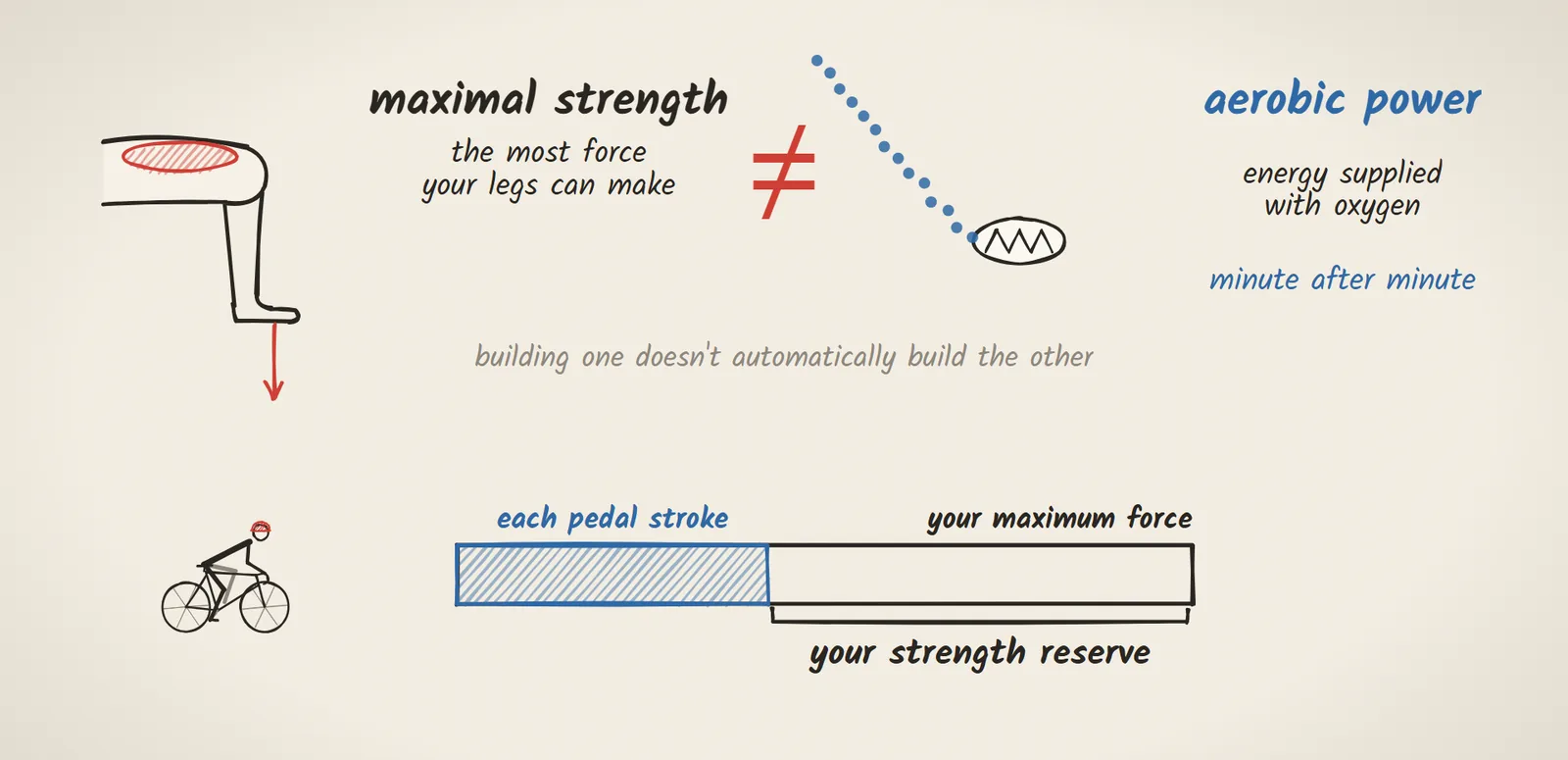
Maximal strength is the most force your legs can make. Aerobic power is how much energy you can keep supplying with oxygen, minute after minute. They’re different qualities, and building one doesn’t automatically build the other. Steady riding only asks for part of your maximum force on each pedal stroke, and that spare capacity is your strength reserve.
Why stronger legs could still help
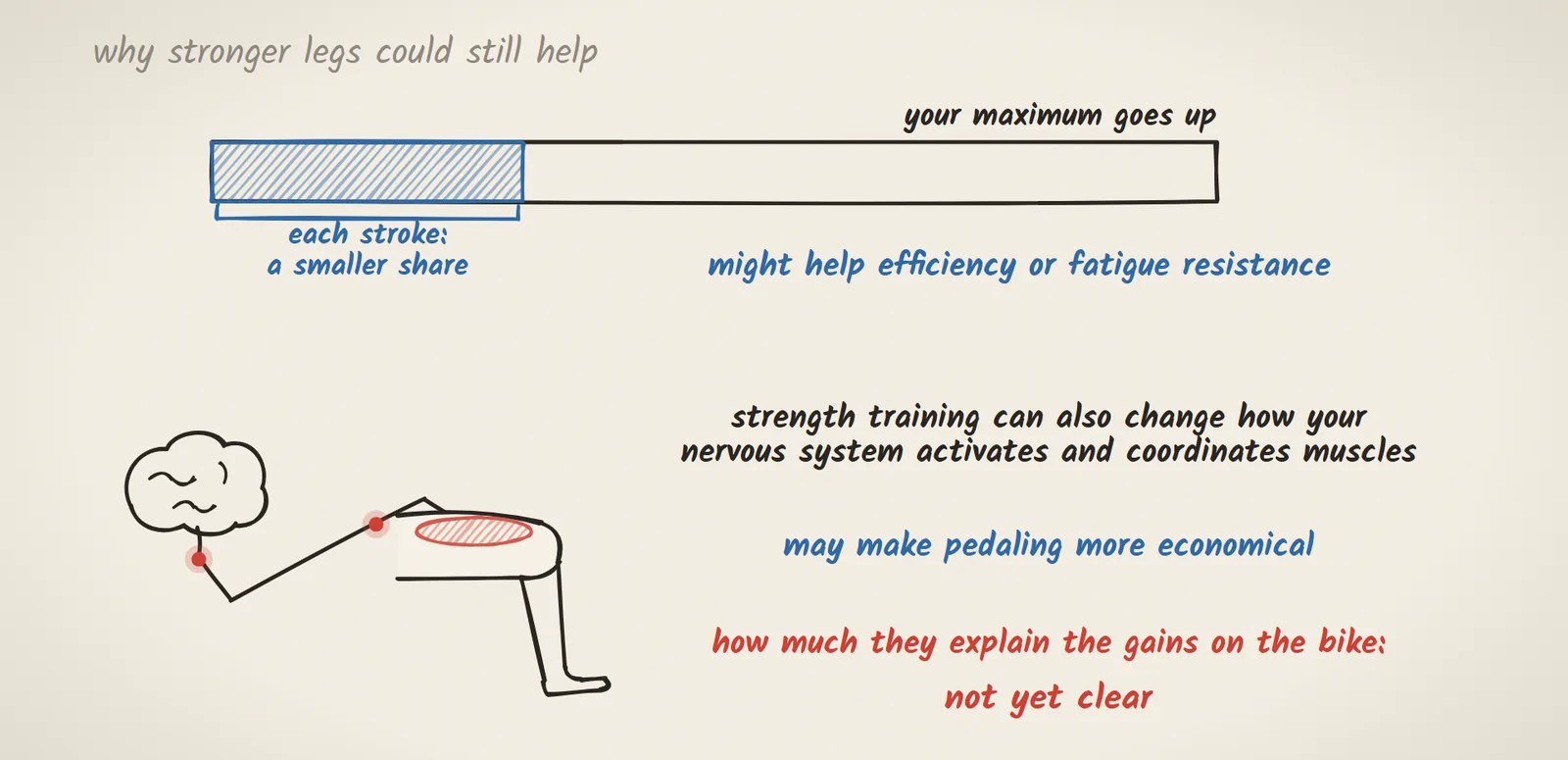
Here’s why stronger legs could still help. If your maximum goes up, each stroke takes a smaller share of it, which might help efficiency or fatigue resistance. Strength training can also change how your nervous system activates and coordinates muscles. These neuromuscular adaptations may make pedaling more economical, but how much they explain the performance gains seen on the bike isn’t yet clear.
Does it work? Seventeen studies
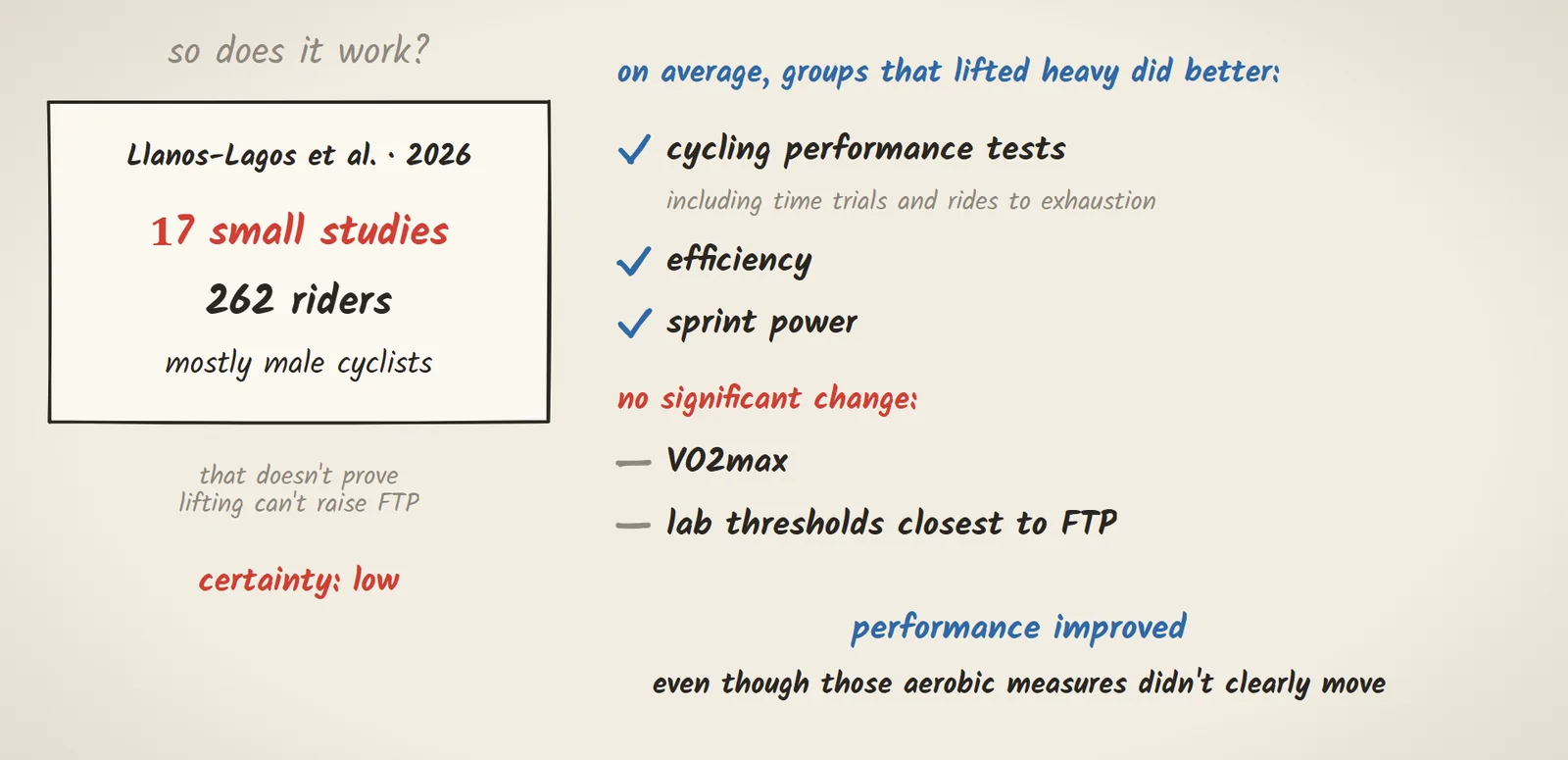
So does it work? A recent analysis pooled 17 small studies and 262 riders, mostly male cyclists. On average, groups that lifted heavy showed better results across cycling performance tests, including time trials and rides to exhaustion, as well as in efficiency and sprint power. It found no significant change in VO2max, or in the lab thresholds closest to FTP. That doesn’t prove lifting can’t raise FTP, and the authors rate their certainty as low. But performance improved even though those aerobic measures didn’t clearly move.
One experiment, after three hours of riding
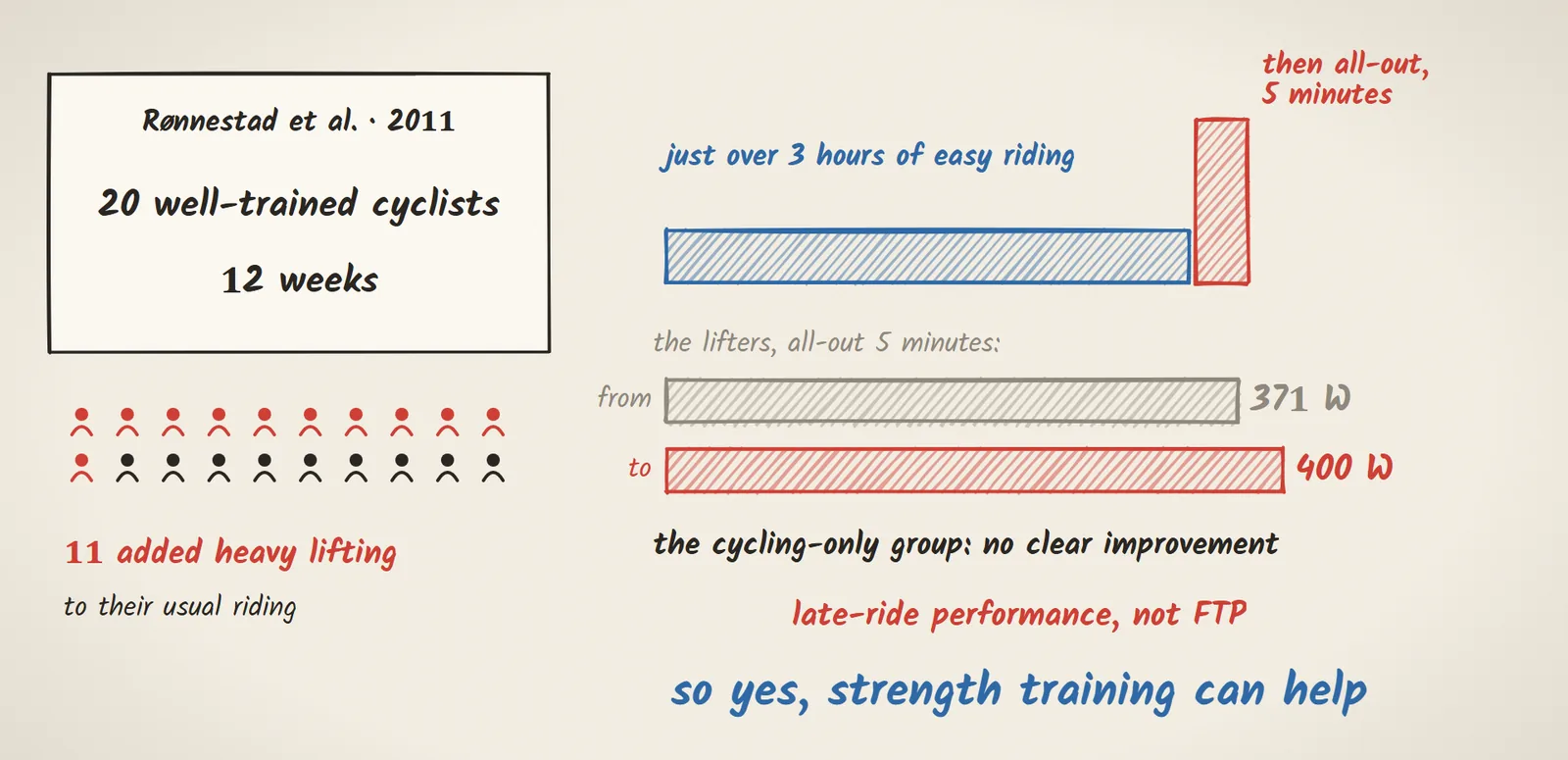
One of those studies shows what this can look like. Twenty well-trained cyclists trained for 12 weeks, and 11 of them added heavy lifting to their usual riding. After just over 3 hours of easy riding, the lifters’ all-out 5 minutes rose from 371 W to 400, while the cycling-only group showed no clear improvement. That’s late-ride performance, not FTP. So yes, strength training can help.
The problem: add-on studies
But here’s the problem. In that study, one group rode and lifted, the other just rode, and many trials are built that way. But a triathlete’s week is fixed, so your hour on Thursday has to come from somewhere. It might have been a swim, a run, or a ride. And if more bike power is the goal, that ride could have been zone 2, sweet spot, or a well-timed VO2max session.
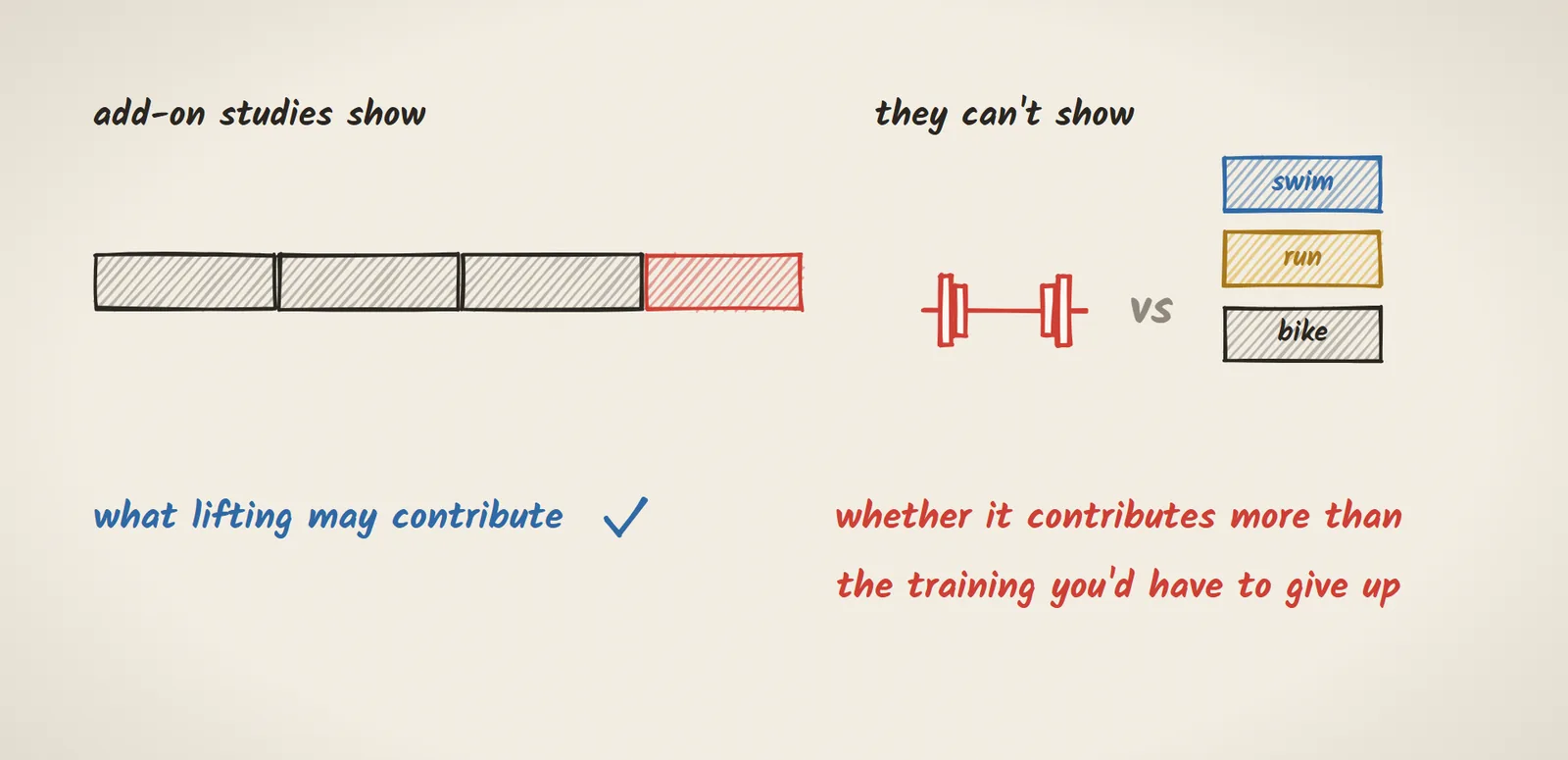
Those add-on studies show what lifting may contribute. They can’t show whether it contributes more than the training you’d have to give up.
Studies that swap riding for lifting
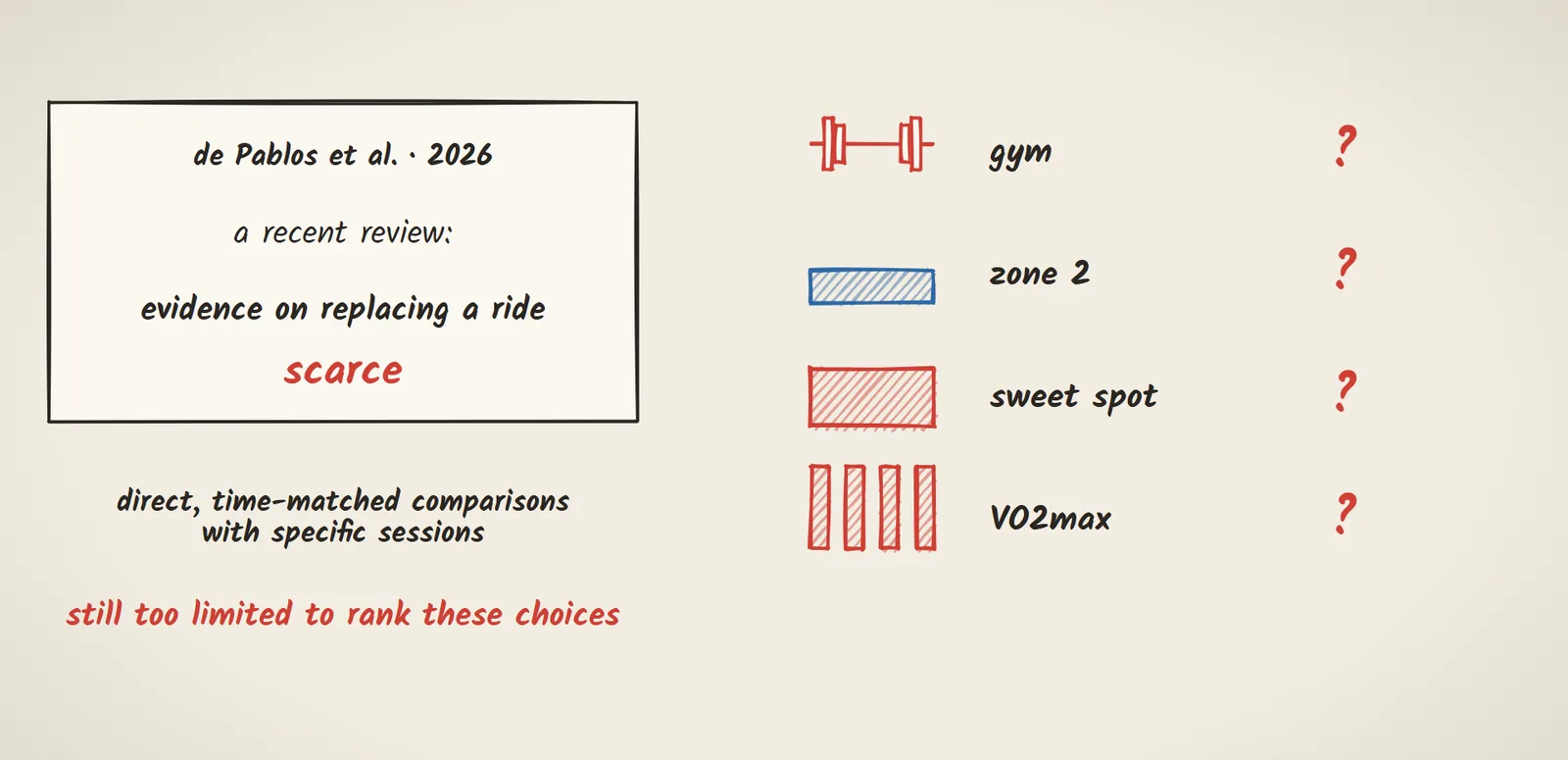
A few small trials have swapped riding for strength work. In one, 6 of 14 competitive cyclists gave over a third of their 9-hour training week to explosive strength work for 9 weeks, with no significant difference in endurance performance between the groups. That doesn’t prove the two were equal. A recent review calls the evidence on replacing a ride scarce, and direct, time-matched comparisons with specific sessions are still too limited to rank these choices.
A tight week
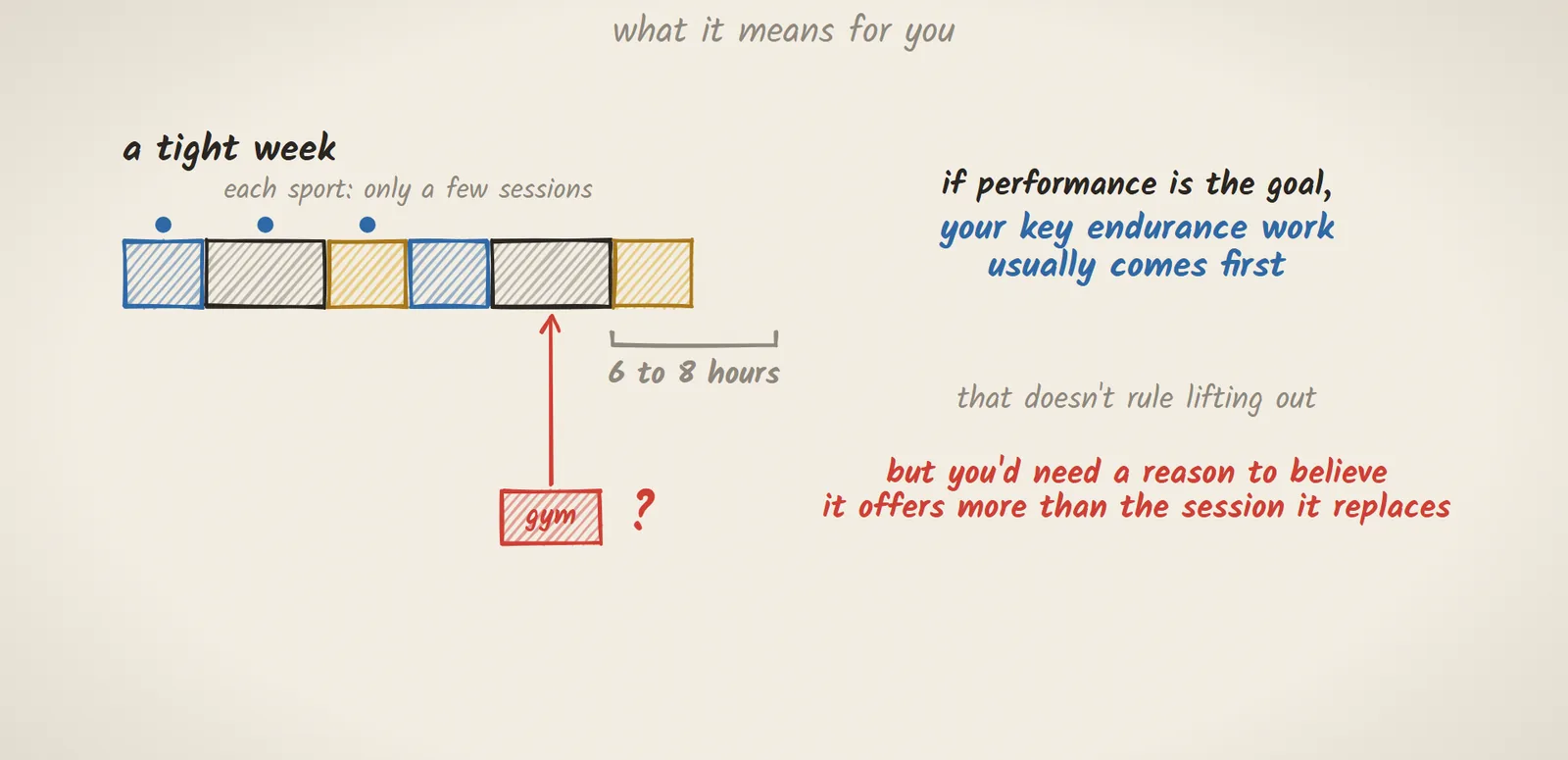
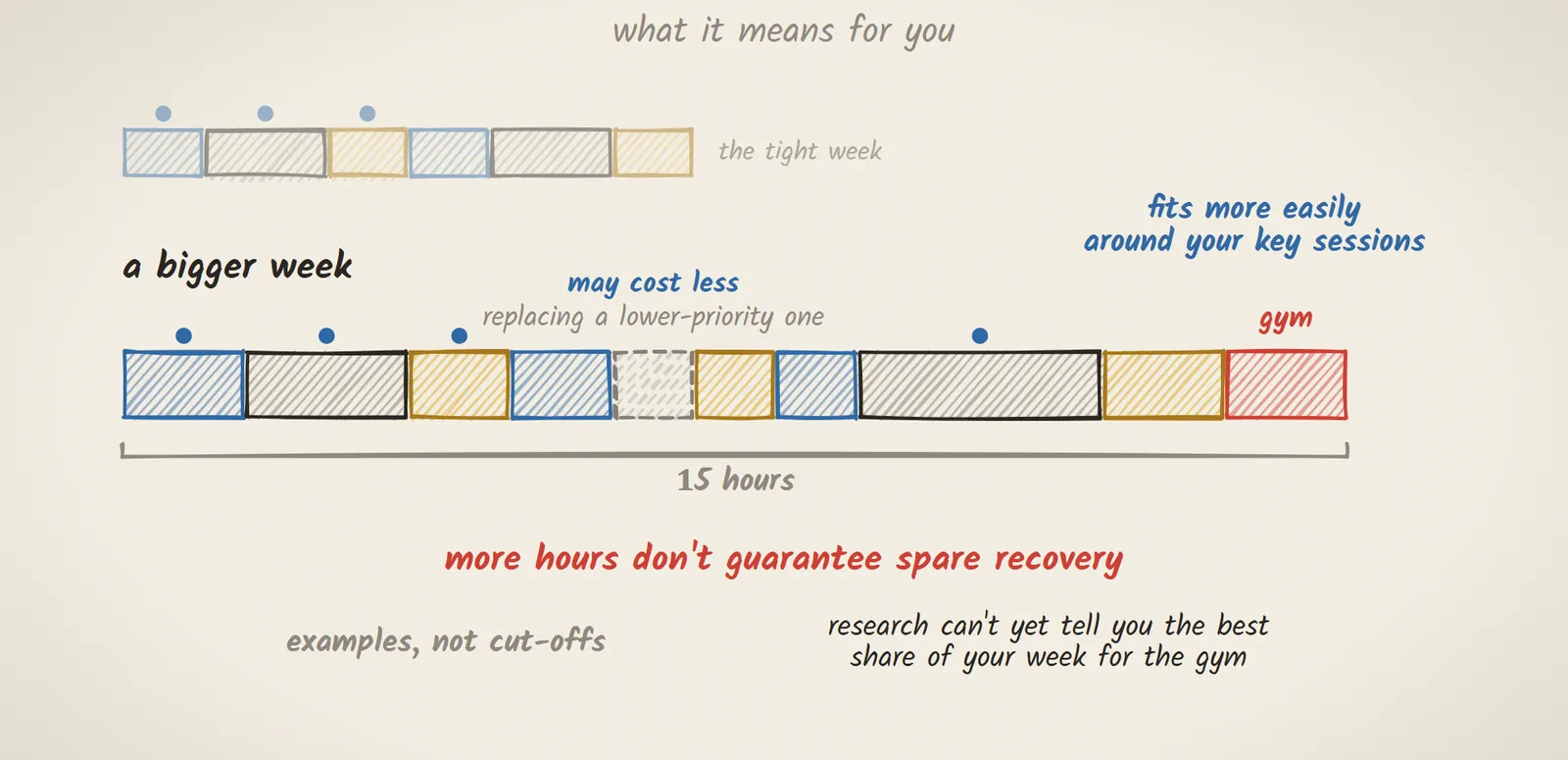
So what does this mean for you? On a tight week, say 6 to 8 hours across swim, bike and run, each sport may only get a few sessions. If performance is the goal, your key endurance work usually comes first. That doesn’t rule lifting out, but you’d need a reason to believe it offers more than the session it replaces.
A bigger week
On a bigger week, say 15 hours, strength work fits more easily around your key sessions, and replacing a lower-priority one may cost less. But more hours don’t guarantee spare recovery. These hours are examples, not cut-offs, and research can’t yet tell you the best share of your week for the gym.
The season
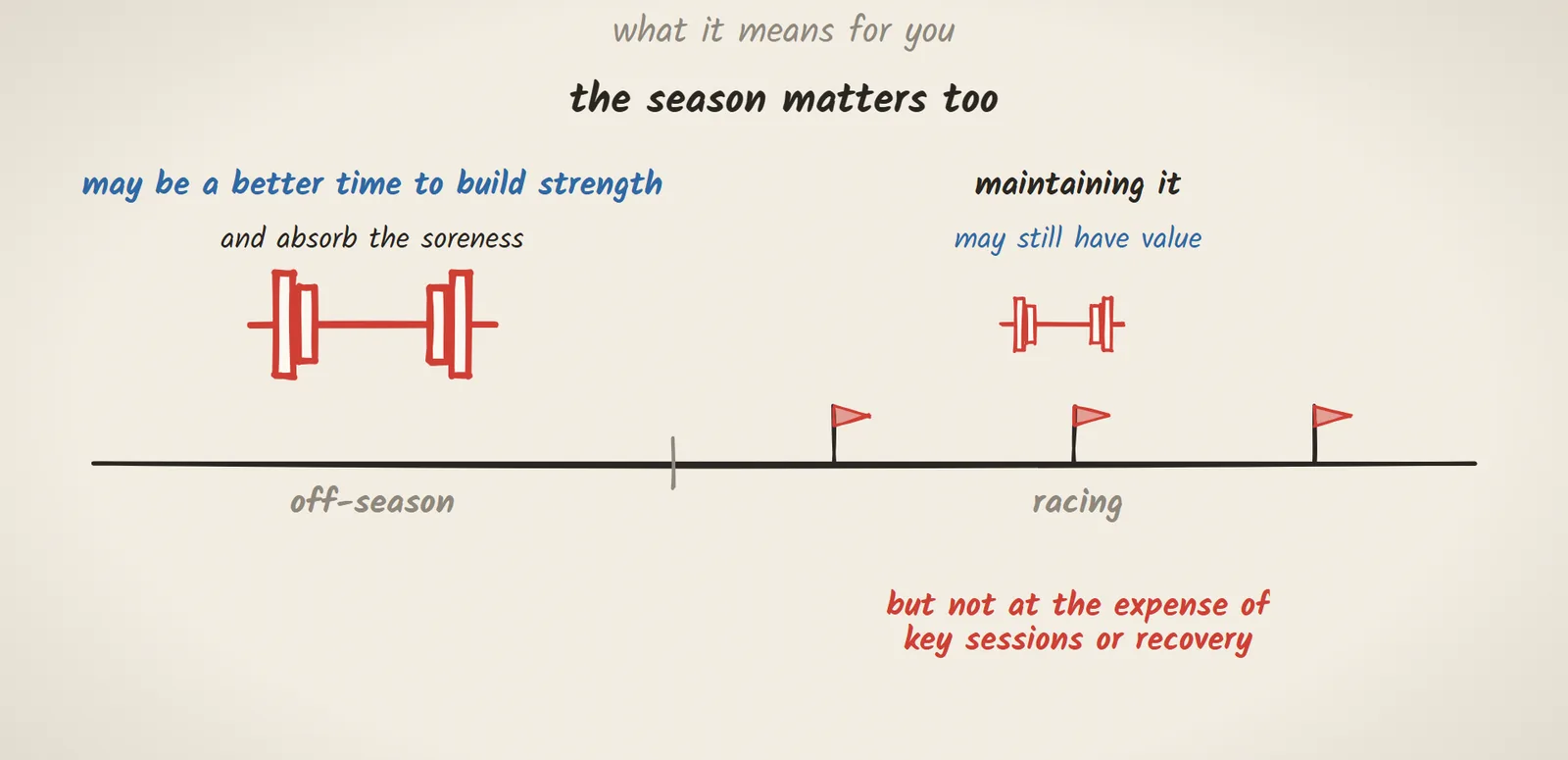
The season matters too. The off-season may be a better time to build strength and absorb the soreness. During racing, maintaining it may still have value, but not at the expense of key sessions or recovery.
Reasons to lift that aren’t FTP
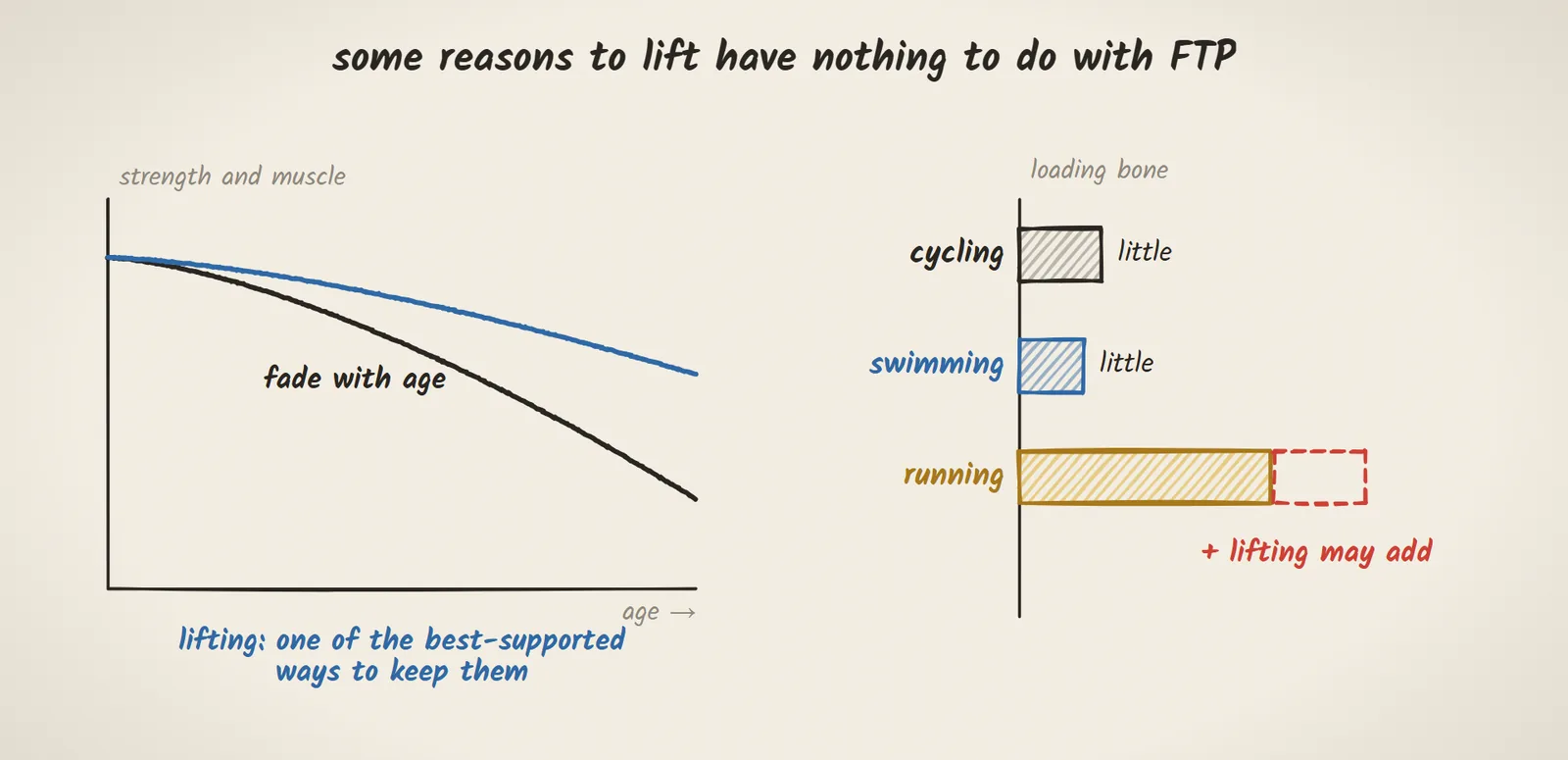
Some reasons to lift have nothing to do with FTP. Strength and muscle fade with age, and lifting is one of the best-supported ways to keep them. Cycling and swimming do little to load bone. Running does more, and lifting may add to it.
What to ask before you lift
So strength training can work. Whether it deserves priority is an individual decision. Phil’s general advice is to add strength work when time allows, and protect aerobic training when it doesn’t. So ask what you’re trying to improve, what you’re already training, what lifting would replace, and whether you can recover from it at this point in your season. The question isn’t only whether strength training works. It’s whether it gives you more than the training you’d have to give up.
That’s what’s underneath the watts.
Sources
The study
- 20 well-trained cyclists trained for 12 weeks, and 11 of them added heavy lifting to their usual riding. After 185 minutes of cycling, the lifters’ all-out 5 minutes rose from 371 W to 400 W, while the cycling-only group showed no clear improvement: Rønnestad BR, Hansen EA, Raastad T. Strength training improves 5-min all-out performance following 185 min of cycling. Scand J Med Sci Sports. 2011;21(2):250-259. doi.org/10.1111/j.1600-0838.2009.01035.x
The review
- 17 small studies and 262 riders, mostly male cyclists: groups that lifted heavy did better on cycling performance tests, efficiency and sprint power, with no significant change in VO2max or the lab thresholds closest to FTP, and the authors rate their certainty as low: Llanos-Lagos C, Ramirez-Campillo R, Sáez de Villarreal E. Heavy strength training effects on physiological determinants of endurance cyclist performance: a systematic review with meta-analysis. Eur J Appl Physiol. 2026;126(1):193-222. doi.org/10.1007/s00421-025-05883-2
Also in this article
- 14 competitive cyclists for 9 weeks, the same total hours: 6 replaced 37% of their training with explosive strength work, with no significant difference in endurance performance: Bastiaans JJ, van Diemen AB, Veneberg T, Jeukendrup AE. The effects of replacing a portion of endurance training by explosive strength training on performance in trained cyclists. Eur J Appl Physiol. 2001;86(1):79-84. doi.org/10.1007/s004210100507
- A narrative review: most studies add lifting to usual riding, and the evidence on replacing a ride is scarce. It also covers bone health: de Pablos R, Sánchez-Redondo IR, Alejo LB, Pallarés JG, Barranco-Gil D, Valenzuela PL. Resistance training for cyclists: scientific evidence and practical recommendations. Scand J Med Sci Sports. 2026;36(10):e70377. doi.org/10.1111/sms.70377
Written and researched by Yarin Podoler, a cyclist who wanted to know what’s underneath the watts.